Why Does One Natural Stone Slab Cost More Than Another?
You walk through a slab showroom and find two natural stones that appear somewhat similar.
One costs considerably more.
Why?
Natural stone pricing is more complicated than simply deciding whether something is marble, quartzite, granite, or dolomite.
Every slab has a geological and logistical story behind it.
Where the material was quarried, how much usable stone came from the block, how rare the color is, how difficult it was to process, and even the visual composition of the slab can all affect its value.
Here is what you are actually paying for when you choose natural stone.
1. Rarity Affects Natural Stone Pricing
Some stone is extracted in relatively large quantities.
Other materials come from limited geological deposits, specific areas within a quarry, or blocks that produce a particularly desirable color or pattern.
When there is less material available, the cost can rise.
This is especially true for natural stones with:
Rare coloration
Dramatic mineral deposits
Unusual movement
Highly desirable backgrounds
Limited quarry production
Certain materials may also only appear in exceptional blocks occasionally.
When one arrives, you are not simply buying a color.
You are buying something that may be difficult to find again.
2. The Block Does Not Become 100% Usable Slabs
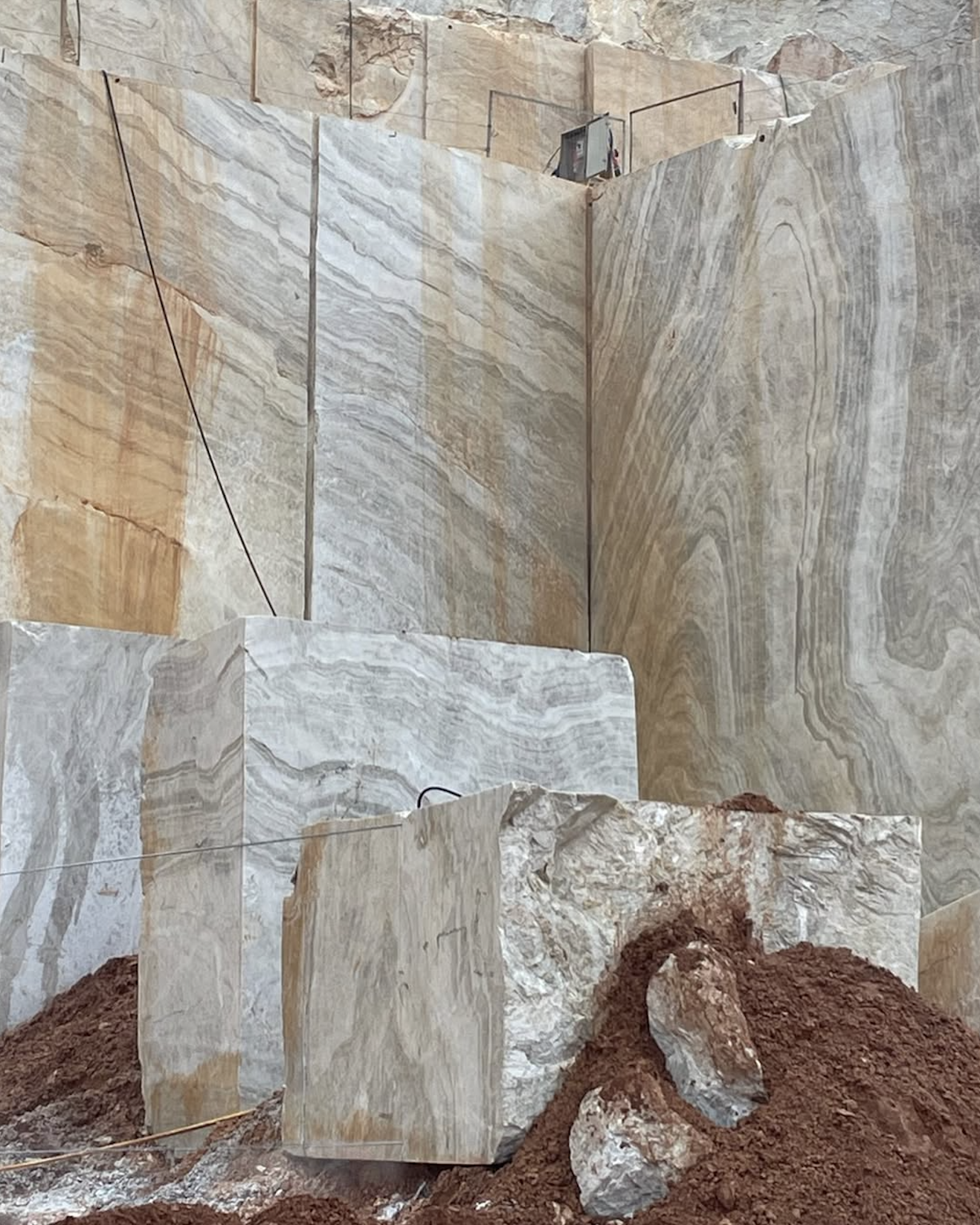
Natural stone begins as a massive block extracted from the earth.
That block must then be transported, cut, reinforced where necessary, processed, finished, and inspected.
Not every inch becomes a finished slab.
Certain sections may contain characteristics that reduce usable yield or make portions unsuitable for a particular project.
The fewer usable slabs that can be produced from a valuable block, the more the economics of that block change.
3. Quarry Location Matters
Natural stone comes from around the world.
Brazil is known for extraordinary quartzites and mineral-rich materials.
Italy has produced some of the most historically recognized marbles.
Turkey, Greece, Portugal, Spain, India, and other regions each produce distinct stones shaped by their geology.
But quarry location affects much more than the material’s story.
Extraction, labor, inland transportation, ocean freight, processing, tariffs or import costs, and the accessibility of the quarry can all contribute to the final price.
A stone sourced from a difficult-to-access quarry and transported halfway across the world naturally has a different journey than one extracted closer to its final market.
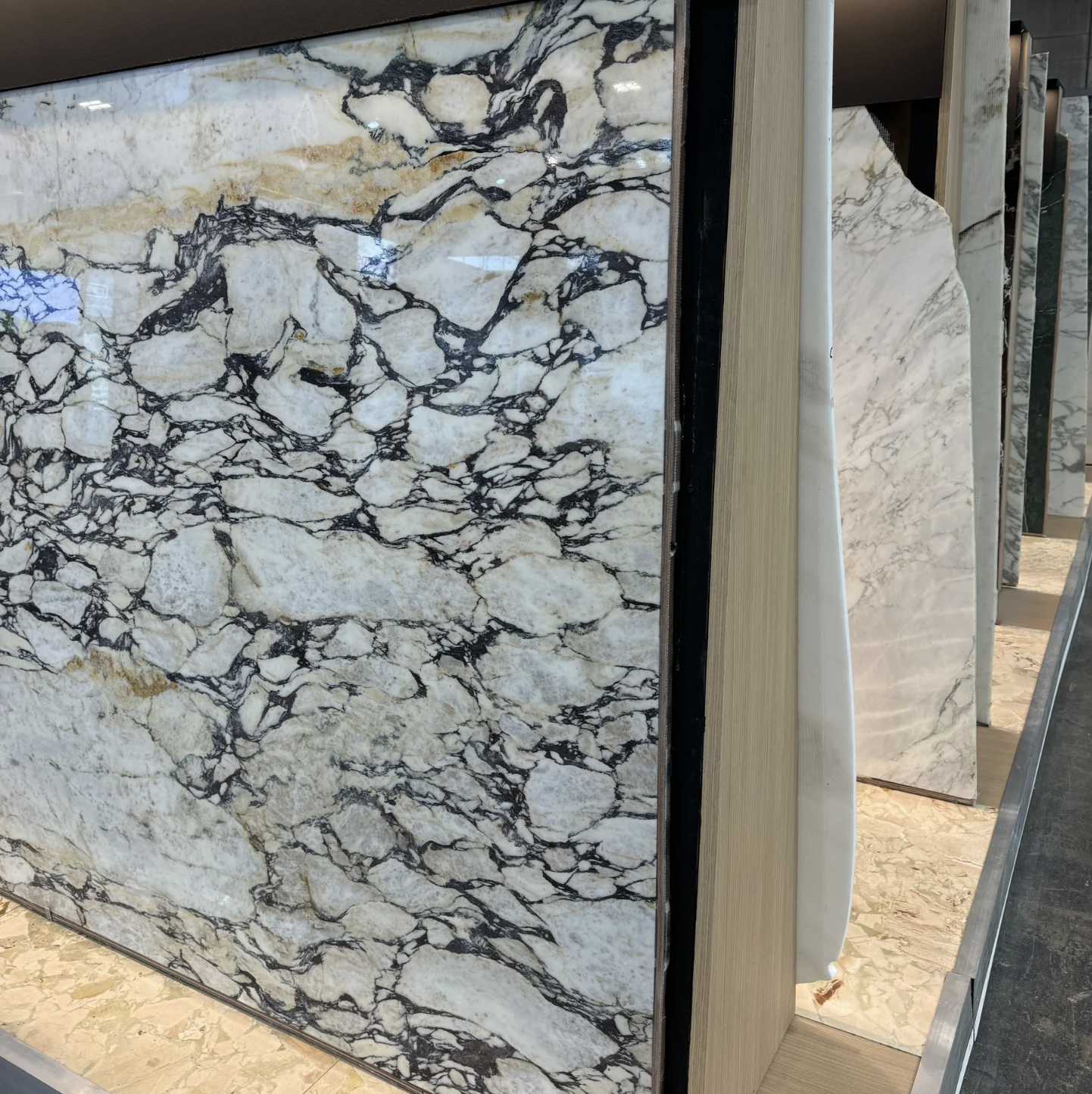
4. Movement, Color, and Composition Affect Demand
Natural stone is both geological material and design material.
A slab with beautifully balanced movement can be more desirable than another slab from a similar family.
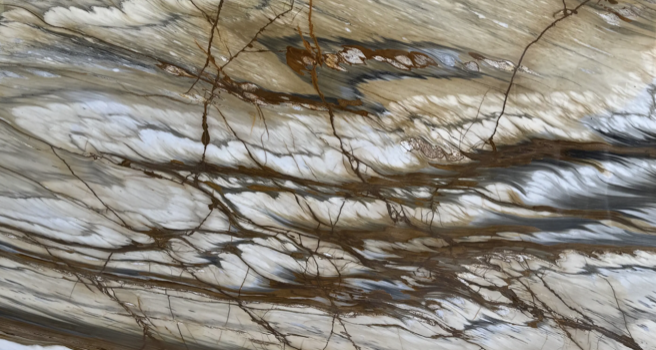
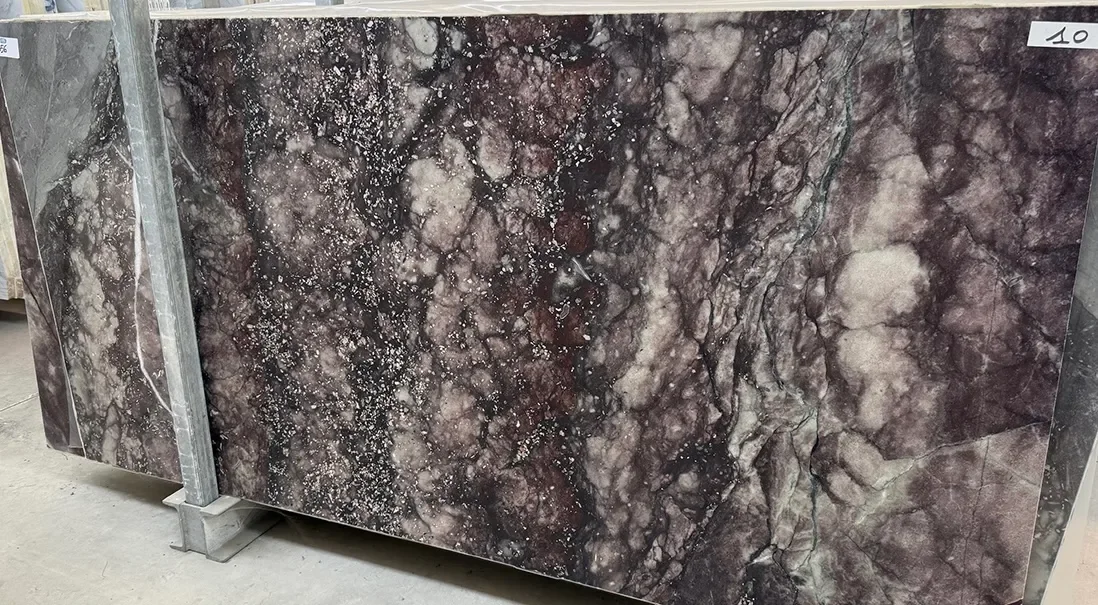
Unusual colors, dramatic veining, translucent areas, crystalline deposits, and highly directional movement can all make a material more sought after.
Two slabs may share a commercial name while looking dramatically different.
That individuality is one of the reasons natural stone cannot be evaluated like a standardized manufactured product.
5. Thickness and Finish Affect Processing
Natural stone slabs are available in different thicknesses, and some materials undergo additional finishing before reaching the showroom or project.
Polished may be the most familiar finish, but honed, leathered, sandblasted, brushed, and other textured surfaces can require additional processing.
Custom fabrication or architectural texturing can take that even further.
The amount of work required to bring the surface to its final appearance affects its cost.
6. Quality Is More Than the Name on the Slab
A stone name does not tell you everything about the material.
Within a stone family, you may see differences in:
Background color
Overall composition
Slab size
Structural characteristics
Pattern
Usable surface area
Finish quality
Bundle consistency
This is one of the reasons full-slab selection matters.
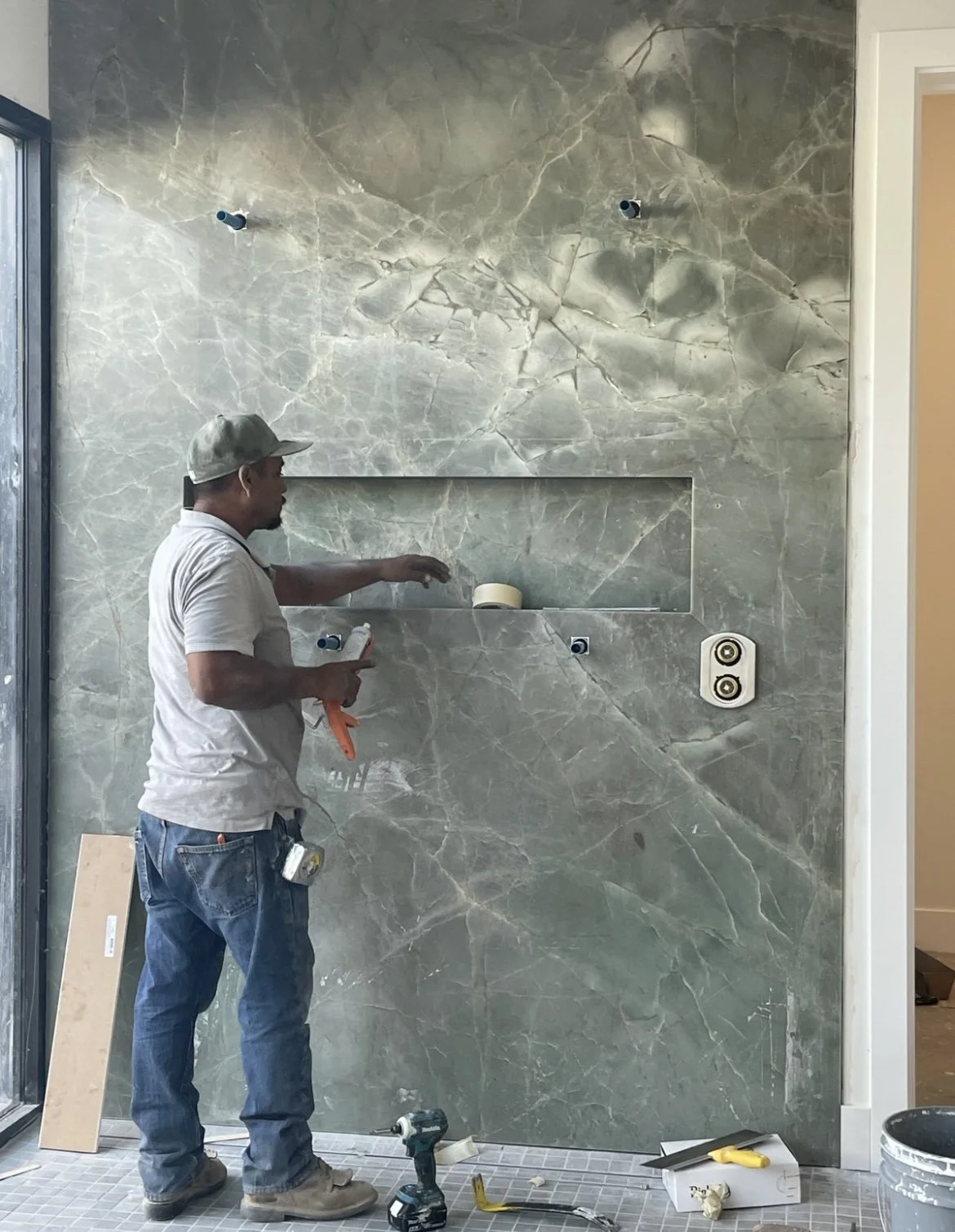
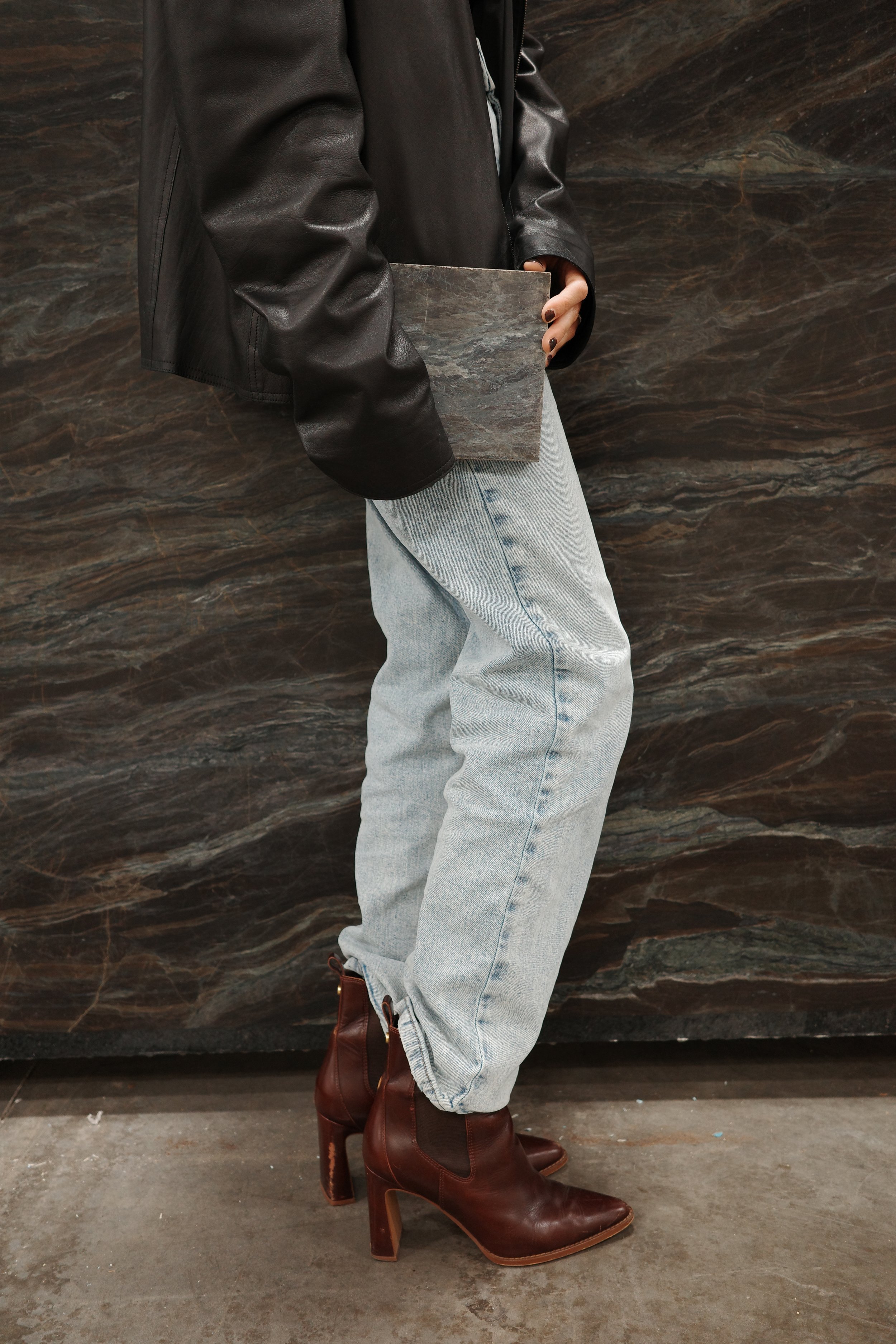
A small sample may help establish color direction, but it cannot communicate the entire composition of a seven-, nine-, or ten-foot slab.
Is More Expensive Stone Always Better?
Not necessarily.
The most expensive material is not automatically the best material for your project.
The right stone should make sense for the design, application, lifestyle, fabrication plan, and budget.
Sometimes a relatively accessible material is exactly what the room needs.
Other times, a rare slab becomes the foundation for the entire design.
The goal should not be choosing the highest price.
It should be understanding what creates value and deciding where that value matters to you.
Shop the Slab, Not Just the Stone Name
Natural stone is not a standardized commodity.
Each block is different.
Each bundle is different.
And each individual slab has its own composition.
That is why comparing stone solely by material name or price per square foot can miss much of the story.
Look at the actual slab.
Look at the movement.
Consider the usable area.
Ask where it came from.
Understand what makes the material unique.
At Arista Stones, our team sources natural stone from around the world for designers, architects, builders, fabricators, and homeowners looking for materials beyond the expected.
Visit our showrooms in Tempe, Arizona and West Valley City, Utah to explore the collection and understand the differences firsthand.