

Honed vs. Leathered vs. Polished Stone: How the Finish Changes the Entire Slab
Choosing a natural stone slab is only part of the design process.
The finish can completely change how that stone looks, feels, and interacts with the rest of the room.
A polished marble may appear rich, reflective, and dramatic. Hone that same material and it can suddenly feel softer and more architectural. Add texture through a leathered finish and the surface itself becomes part of the design.
If you’re selecting marble, quartzite, granite, dolomite, or another natural stone, the finish deserves almost as much attention as the slab.
What Is a Polished Stone Finish?
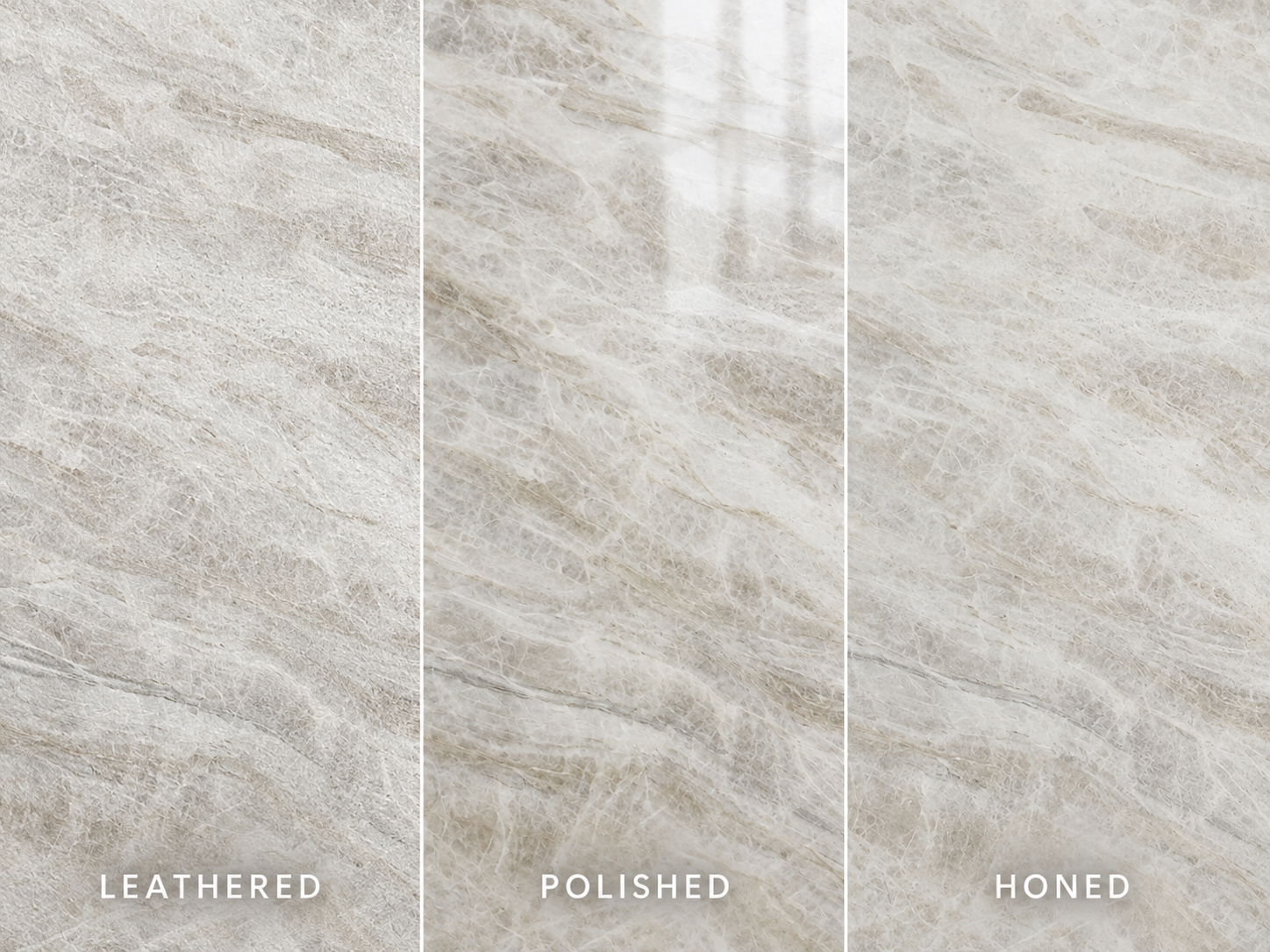
A polished finish creates a smooth surface with a noticeable level of shine and reflection.
Polishing tends to deepen color and emphasize the natural movement within the stone. Veining may appear sharper, darker colors can look richer, and crystalline areas often become more visible.
This is why many dramatic marbles and quartzites look especially striking when polished.
Polished stone can work beautifully for:
Kitchen countertops
Statement islands
Bathroom vanities
Bar tops
Fireplace surrounds
Decorative wall applications
The reflective finish does have a practical consideration: fingerprints, water spots, etching, and surface marks may be easier to see depending on the stone.
If your goal is maximum color, contrast, and visual depth, polished is often where that material will look its most dramatic.
What Is a Honed Stone Finish?
A honed finish is smooth to the touch but has little to no reflective shine.
Instead of emphasizing gloss, honing creates a more muted surface. The stone may appear slightly lighter, softer, or less saturated than the same material would when polished.
That softer appearance is exactly why honed natural stone works so well in organic, contemporary, European-inspired, and understated luxury interiors.
Honed stone is commonly used for:
Kitchen countertops
Full-height backsplashes
Bathroom vanities
Fireplace surrounds
Bars
Wall applications
A honed finish can also make some everyday surface changes feel less visually obvious than they would on a highly reflective surface.
Natural stone is still natural stone. The finish does not change the geological characteristics of the material.
It simply changes how you experience them.
What Is a Leathered Stone Finish?
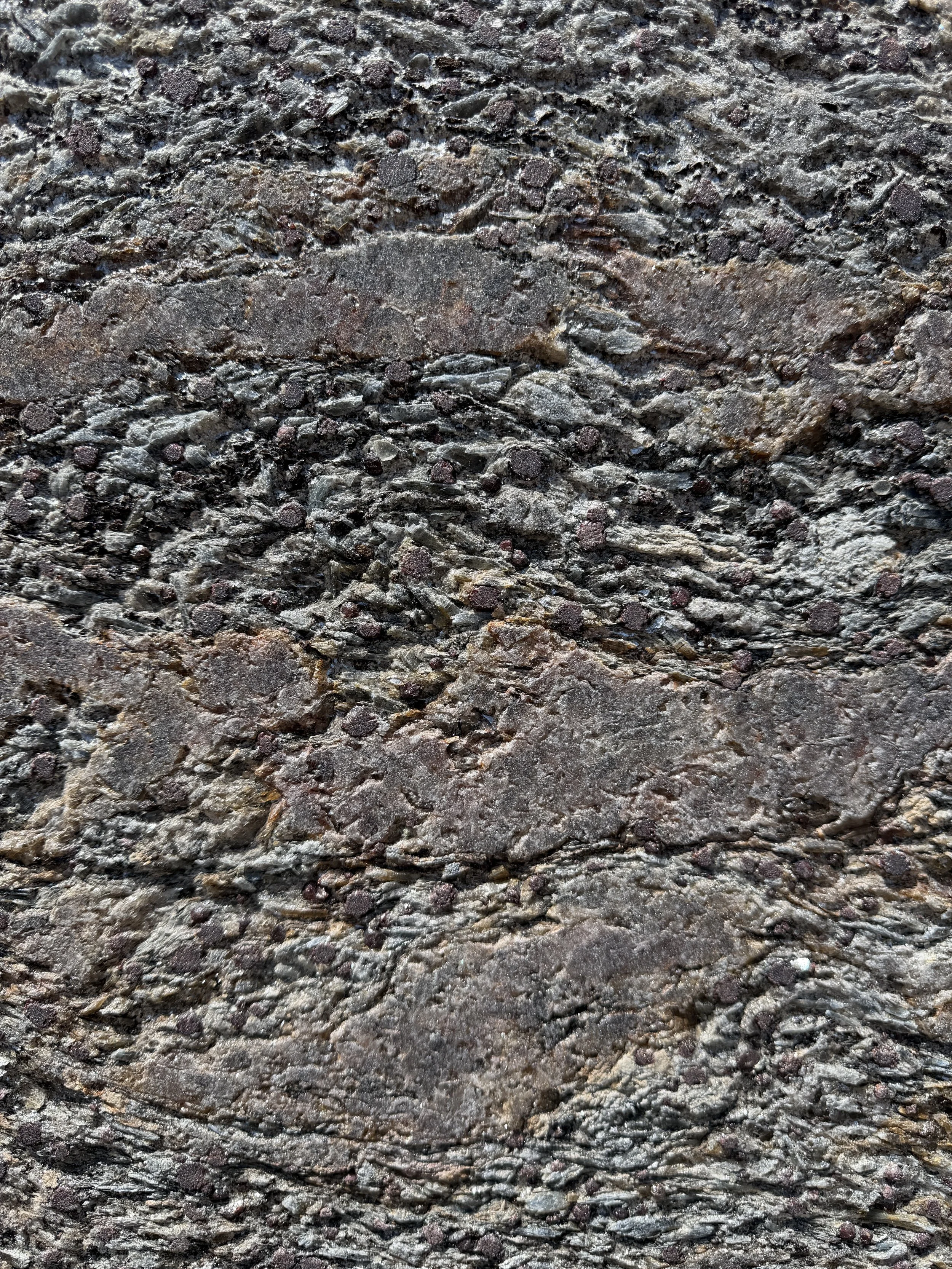
Leathering adds tactile texture to the surface of the stone.
Rather than creating one completely smooth plane, the process works with the mineral structure and natural characteristics of the slab.
Some leathered materials have only a subtle texture. Others become much more dimensional.
The result can make darker stones feel particularly rich while reducing the high reflection associated with a polished surface.
Leathered finishes are beautiful for:
Statement islands
Bars
Powder rooms
Fireplace surrounds
Custom furniture
Feature walls
They are especially compelling when the stone already has dramatic mineral variation or movement.
Does the Finish Change the Color of Natural Stone?
Yes, sometimes significantly.
This is one of the most important things to understand before selecting a finish.
A polished surface typically creates stronger saturation and contrast.
Honing usually softens the appearance.
Leathering can create areas of shadow and depth that make the stone feel richer or more dimensional.
That means the slab you loved polished may feel very different after honing.
Whenever possible, consider the finish while you are selecting the material rather than deciding after the rest of the design has already been finalized.

Which Stone Finish Is Best for a Kitchen?
There is no universal answer.
The best finish depends on the material, your design style, and how you want the space to feel.
Choose polished when you want the stone to feel luminous, saturated, or dramatic.
Choose honed when you want something softer, matte, and architectural.
Choose leathered when texture and tactile interest are an important part of the design.
The stone itself matters too. Not every finish behaves the same way on every material.
That is why seeing full slabs and physical finish samples can be more valuable than making the decision from a photograph.
See the Finish Before You Decide
Natural stone is something you should experience in person.
A screen can show the general color and movement, but it cannot fully communicate texture, depth, reflection, or the way light interacts with the surface.
At Arista Stones, we work with natural stone in polished, honed, leathered, sandblasted, and other custom finishes, giving designers and homeowners more options for creating a surface that fits the entire project rather than simply choosing a stone by name.
Find YOUR PERFECT FINISH
Visit Arista Stones in Tempe, Arizona or West Valley City, Utah to see full slabs in person and talk through finish options for your project.
Because sometimes the finish is what makes the slab.