Beyond the Countertop: 8 Ways Designers Are Using Natural Stone Throughout the Home in 2026
Natural stone is moving off the countertop.
For years, the kitchen island was where homeowners were most likely to make their big stone decision. Find the right marble or quartzite, fabricate the perimeter and island, carry it onto the backsplash, and call the material selection complete.
In 2026, designers are looking at the slab differently.
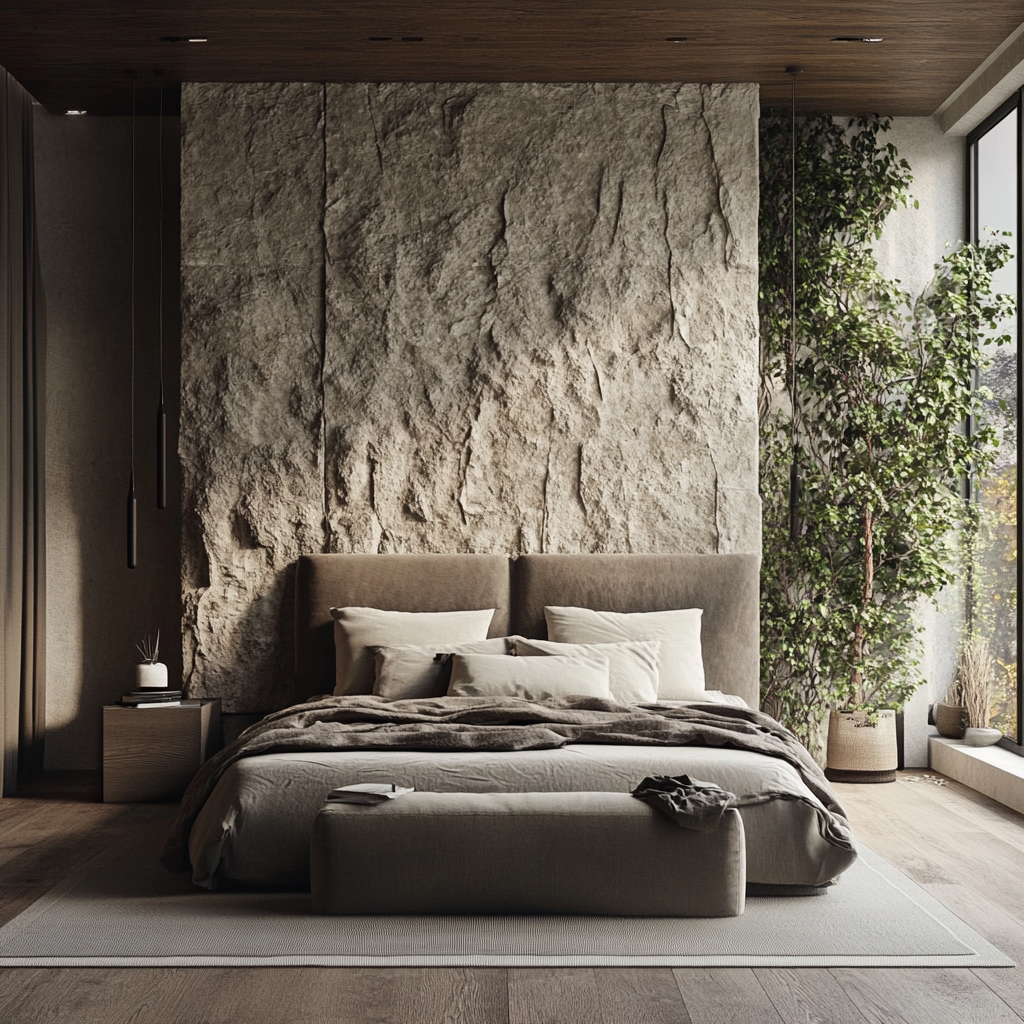
A striking piece of stone is increasingly being treated as an architectural material rather than simply a countertop surface. Marble is wrapping fireplaces. Quartzite is climbing walls. Travertine is being transformed into sculptural tables. Dramatic stones are appearing inside bars, vanities, shelving, door surrounds and custom furniture.
It is part of a larger movement toward interiors that feel layered, collected and specific to the people living in them. Rather than filling a space with interchangeable finishes, designers are choosing fewer materials with considerably more presence.
And natural stone happens to be exceptionally good at that.
Why Natural Stone Is Becoming an Architectural Feature
The appeal of natural stone has always been its variation.
A slab does not repeat every few feet. Veining changes direction. Mineral deposits appear unexpectedly. Color shifts across the surface. Two bundles from the same quarry can have completely different personalities.
That unpredictability is becoming an advantage as interior design shifts away from spaces that feel overly manufactured.
Design coverage throughout 2026 has increasingly emphasized expressive materials, richer color, tactile surfaces and interiors with more individuality. Statement marble, colorful quartzite, travertine and other stones are being incorporated far beyond kitchens and bathrooms.
For designers, this creates an opportunity to think about the slab before thinking about the application.
Instead of asking:
“What stone should we use for the countertop?”
The better question may be:
“What could we build around this stone?”
Here are eight applications worth considering.
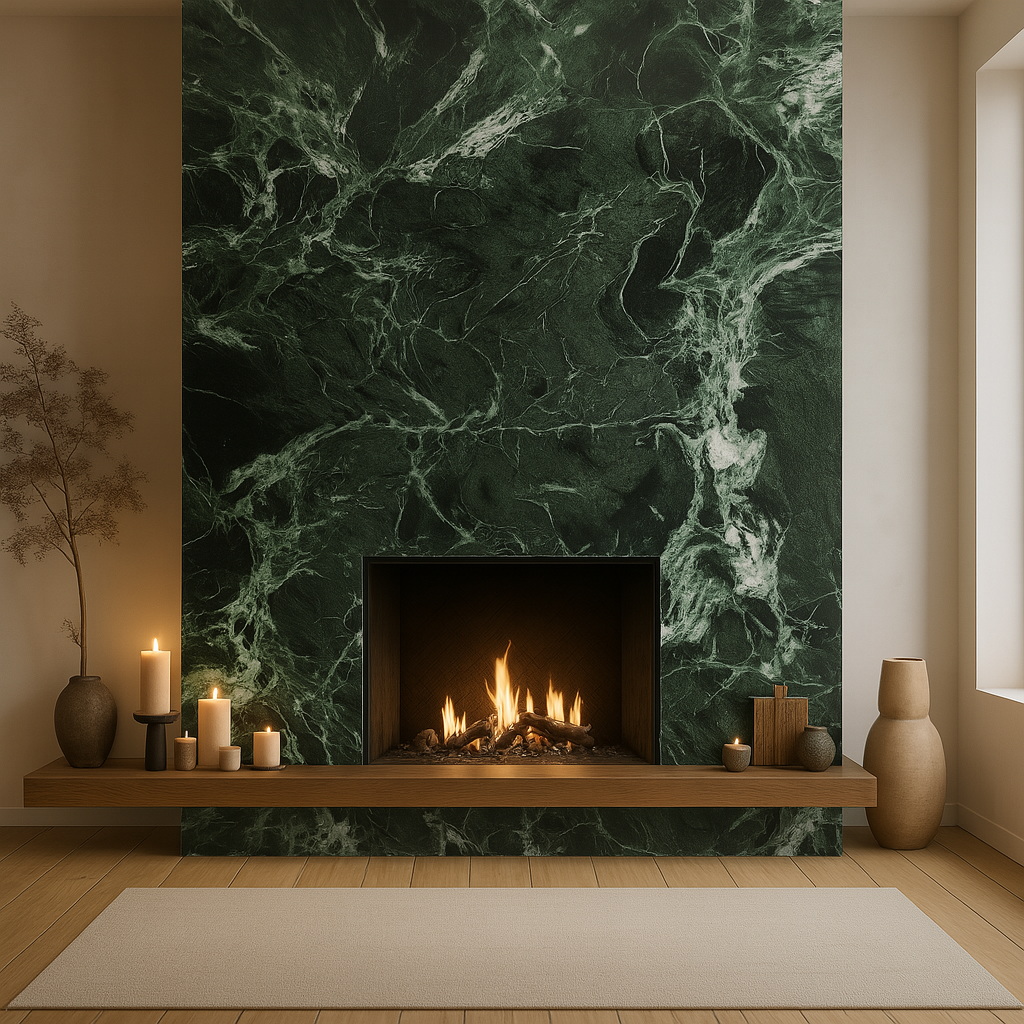
1. Floor-to-Ceiling Stone Fireplace Surrounds
Few applications give a slab more visual impact than a full-height fireplace.
Rather than limiting stone to a narrow border around the firebox, designers are extending marble, quartzite, limestone or travertine vertically to create a strong architectural element.
Large-format slabs work particularly well because they reduce grout lines and allow the natural movement of the material to remain visible.
A subtle limestone can make the fireplace feel monolithic and architectural. A dramatic marble can turn the same wall into the visual centerpiece of the room.
For stones with significant movement, slab layout matters enormously. Veining can be bookmatched, mirrored or intentionally allowed to move asymmetrically across the wall.
Stones to consider:
Design Tip: Select the actual slabs before finalizing fireplace dimensions whenever possible. A few inches can make the difference between capturing an incredible section of veining and cutting directly through it.
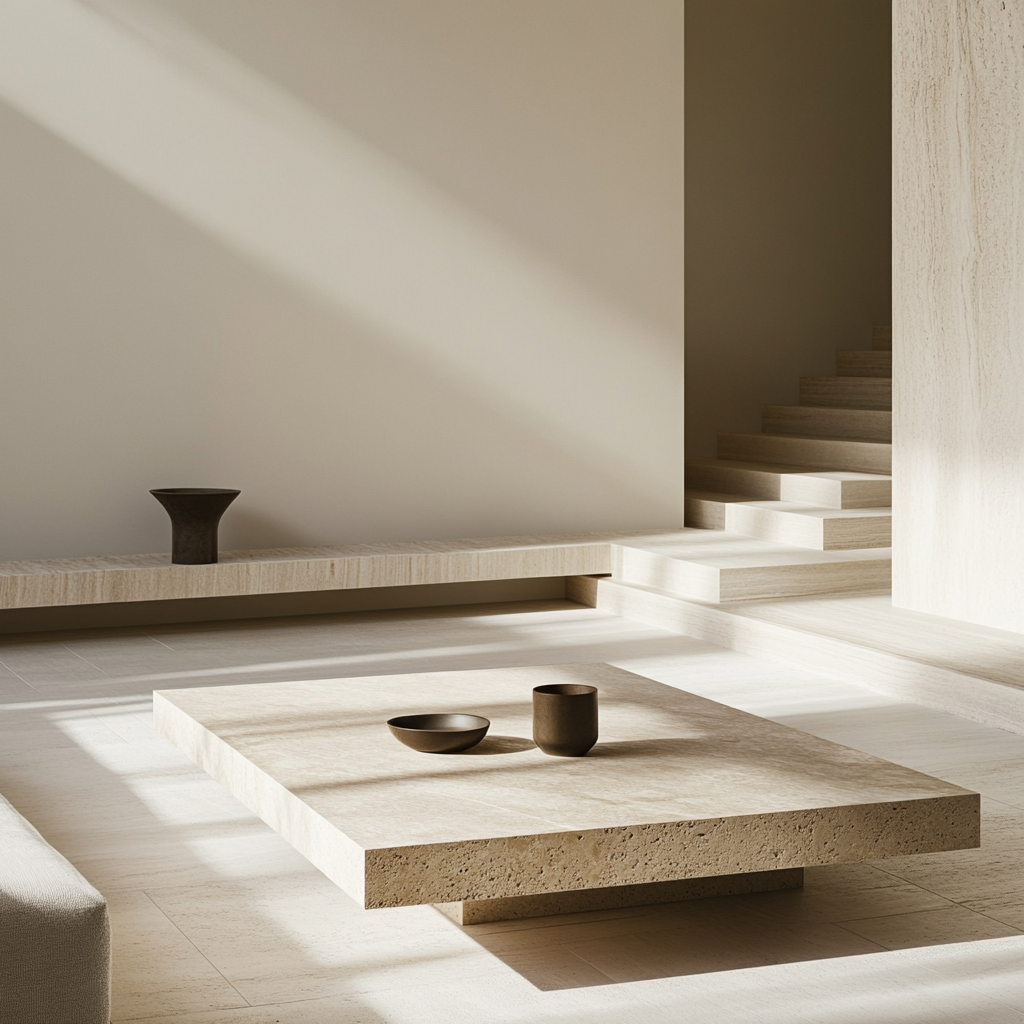
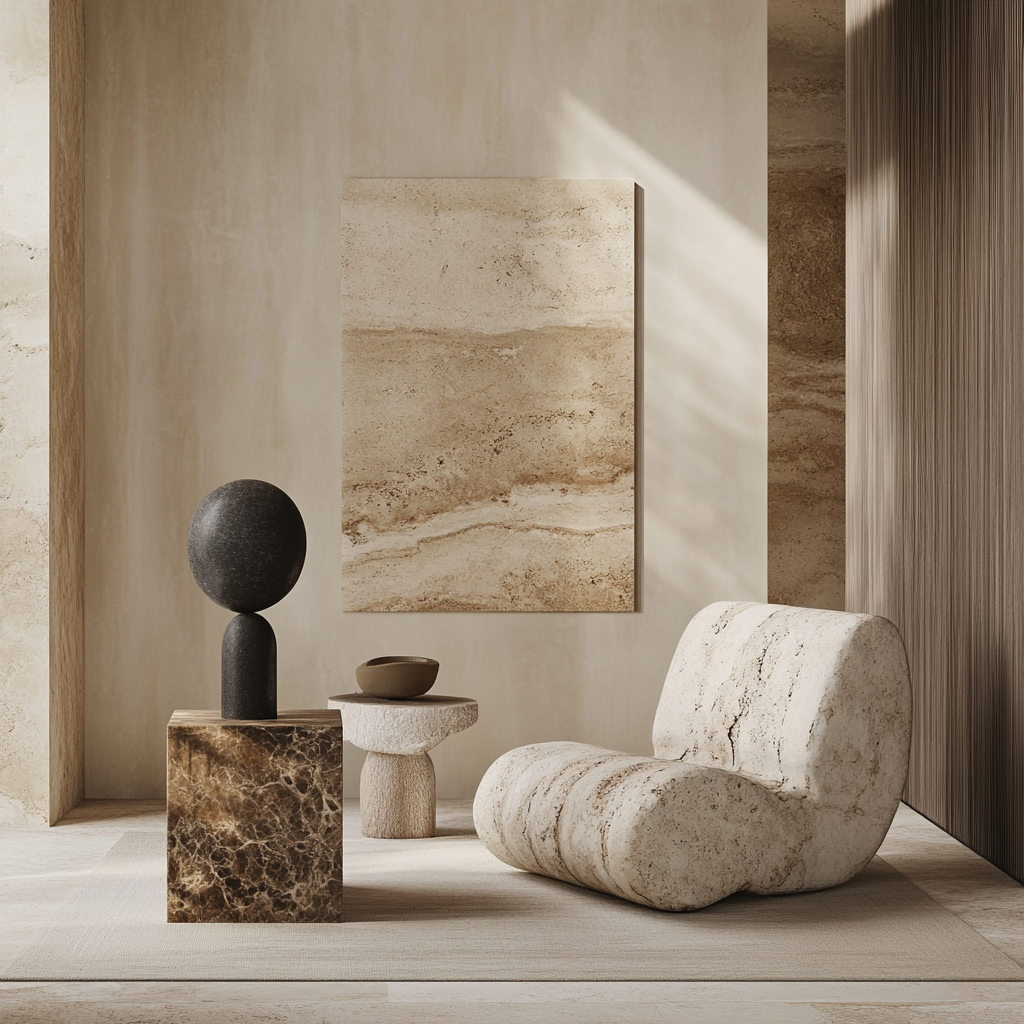
2. Natural Stone Furniture
Stone furniture is one of the most interesting ways to introduce natural material into a room without committing to an entire architectural surface.
Dining tables, coffee tables, side tables, consoles and pedestal tables can all become opportunities to showcase unusual stone.
This is particularly effective with materials that might feel too dramatic for an entire kitchen.
A heavily patterned marble, translucent quartzite or richly colored stone can become much easier to use when concentrated into a single sculptural object.
Designers can also play with fabrication details such as:
Mitered edges
Radius corners
Monolithic bases
Waterfall forms
Fluting
Honed surfaces
Leathered textures
Custom edge profiles
The result feels less like furniture decorated with stone and more like an object created from the material itself.
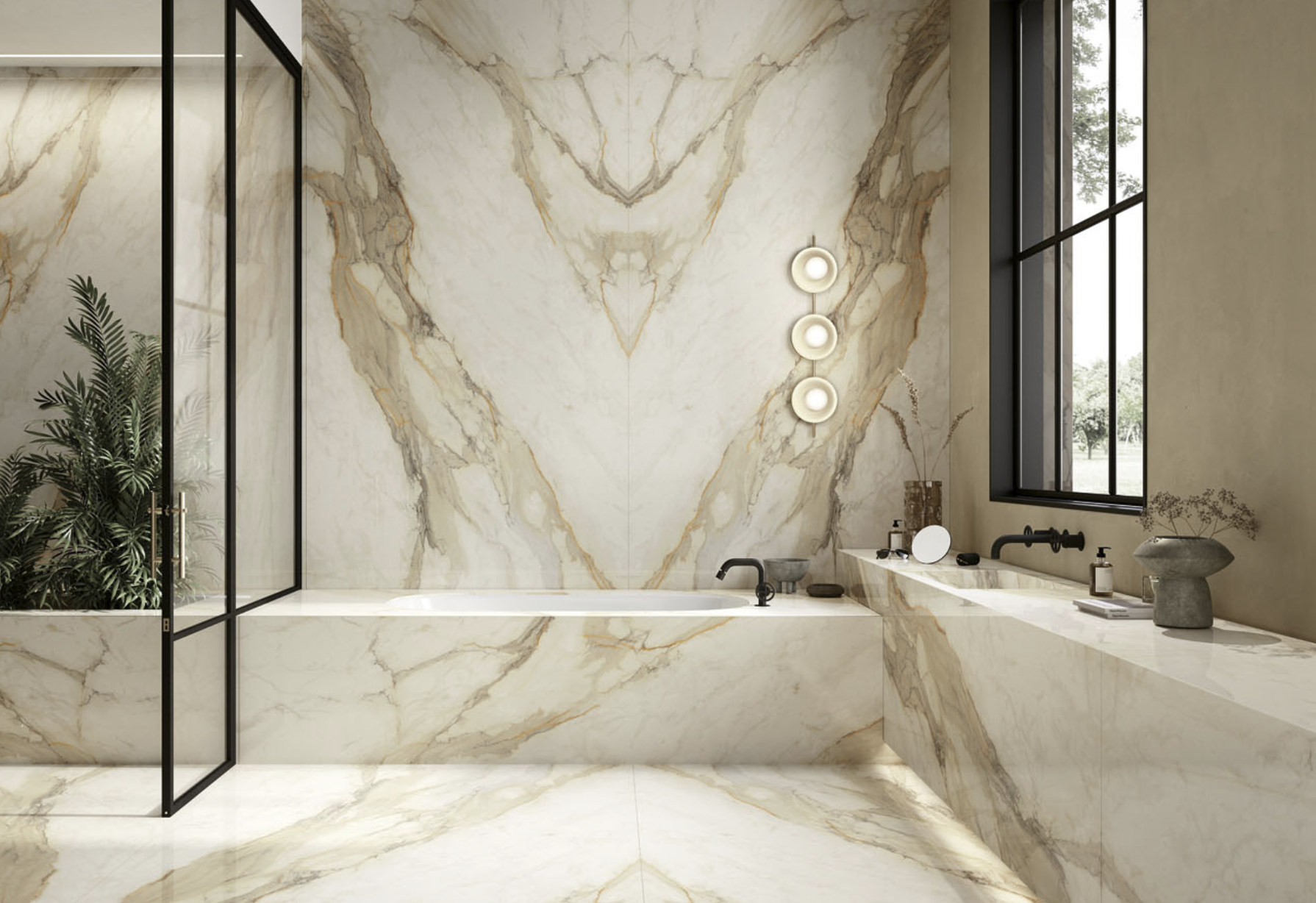
3. Full-Slab Bathroom Walls
Bathrooms are becoming increasingly material-driven.
Instead of introducing five or six competing finishes, designers are using one exceptional stone across larger surfaces.
A full-height marble or quartzite shower wall can create considerably more visual impact than a small tiled feature area. Continuing that same material onto the vanity or tub surround makes the room feel intentional without requiring additional decoration.
Large slab applications also allow the natural veining to remain intact.
That matters.
The beauty of a dramatic slab often comes from seeing the entire composition rather than viewing it after it has been divided into dozens of smaller pieces.
Warm, creamy marbles, expressive quartzites and stones with honed finishes are especially well suited to bathrooms where the goal is to create a softer, more atmospheric environment.
Consider stone for:
Shower walls
Vanity backsplashes
Tub surrounds
Floating vanities
Niches
Bench seating
Full-height feature walls
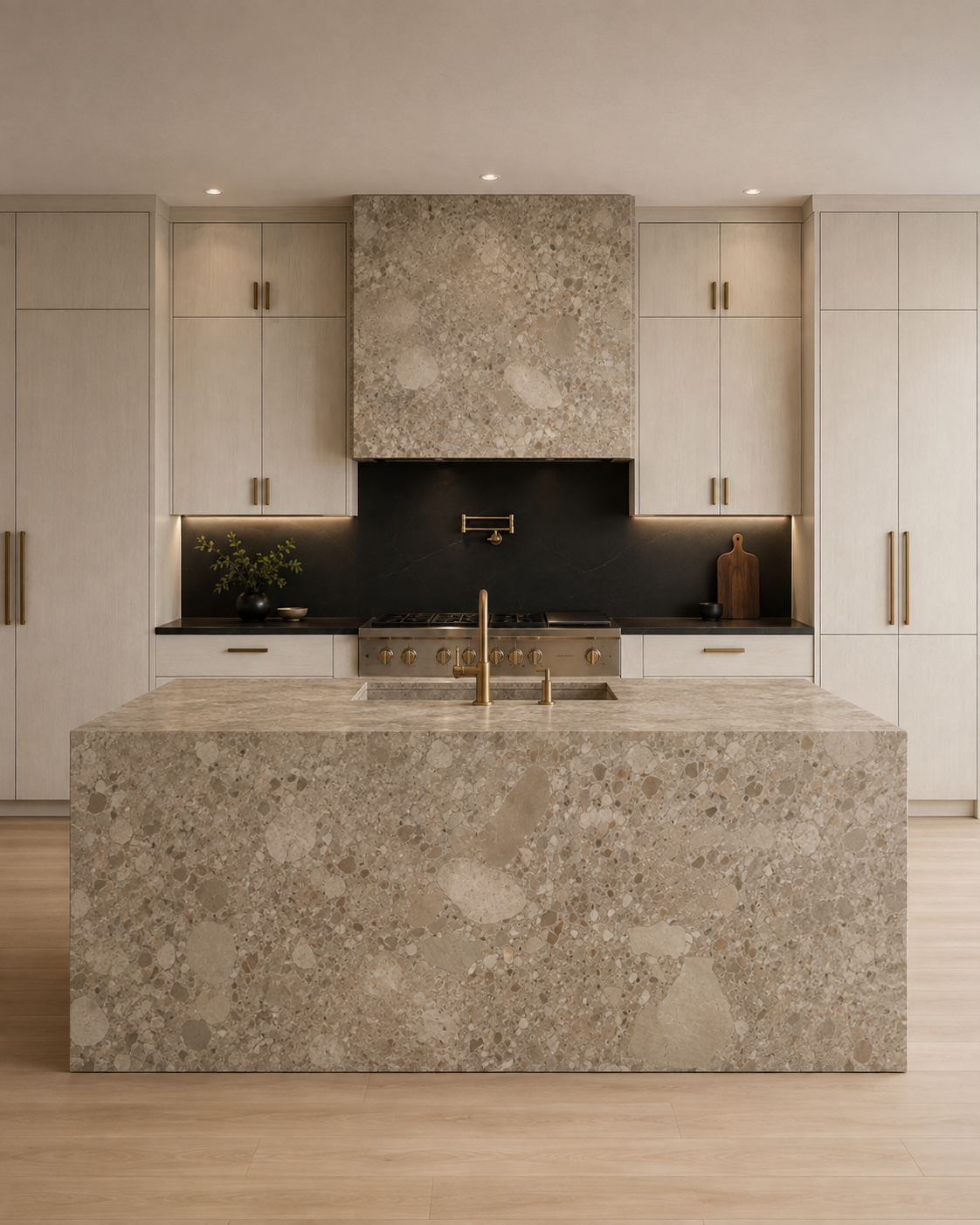
4. Stone-Clad Kitchen Hoods
The countertop may still be stone, but it does not have to be the most interesting stone element in the kitchen.
Cladding the range hood in marble, quartzite or another slab material creates a focal point without introducing another decorative object.
The treatment can be subtle or dramatic.
A softly veined stone can blend into warm cabinetry and plaster walls, while something like Calacatta Viola or a heavily figured quartzite can create intentional contrast.
The strongest examples usually allow the material itself to establish the shape.
Simple architectural forms give bold stone room to do the work.
Designer Consideration: Ask your fabricator about weight, substrate requirements, seam locations and fabrication limitations early in the design process. A stone-clad hood should be designed with fabrication in mind rather than added after cabinetry has already been finalized.
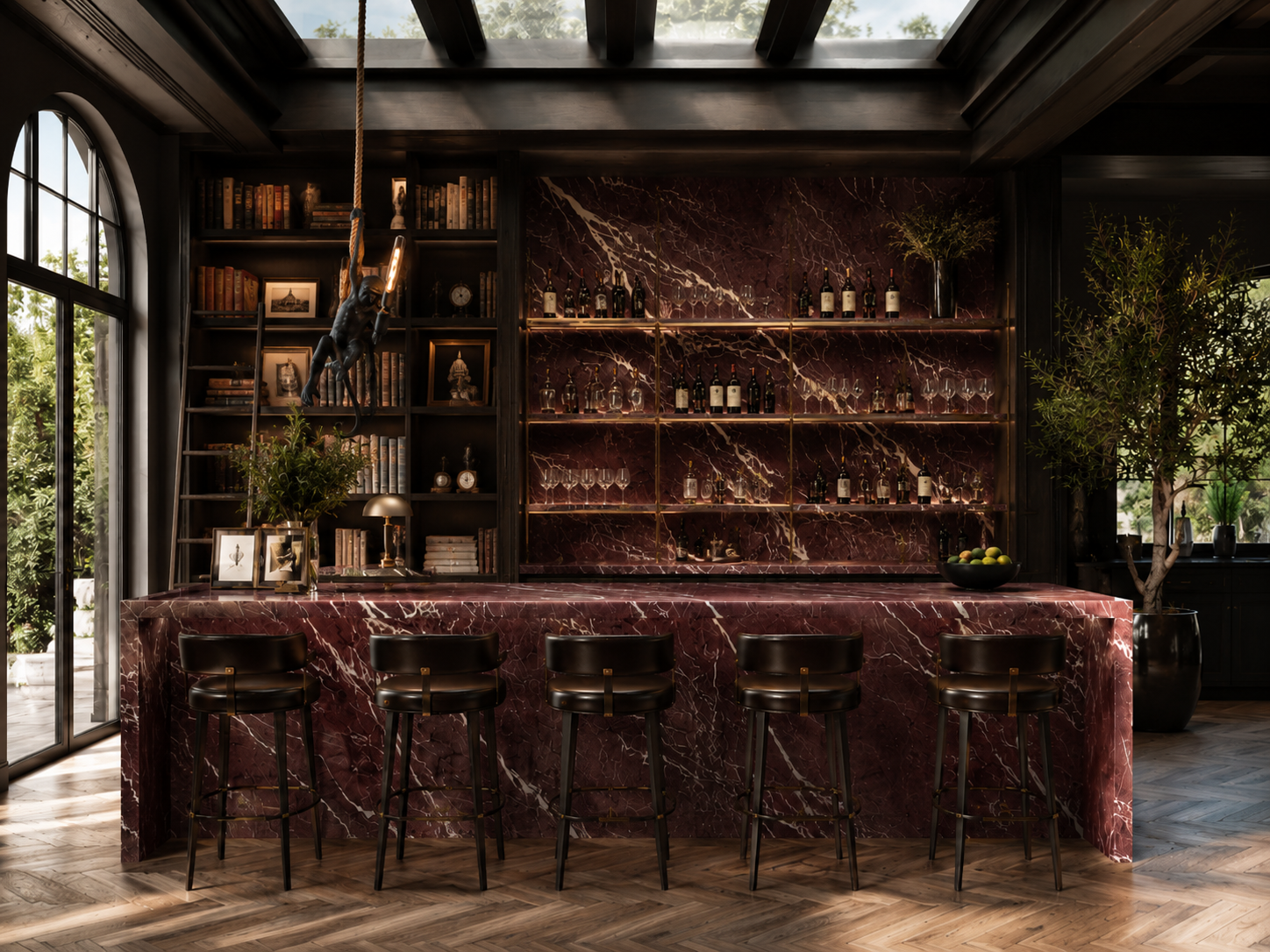
5. Home Bars and Beverage Areas
If there is one place where designers can afford to take a material risk, it is often the bar.
Home bars, wine rooms and beverage stations occupy smaller footprints than kitchens, which makes them ideal locations for unusual stone.
Deep green marble. Burgundy veining. Blue quartzite. Black stone. Translucent materials. Strong brecciation.
Materials that might dominate a large kitchen can feel perfectly scaled in a smaller bar.
Designers are also using stone vertically rather than limiting it to the work surface.
Try carrying the slab:
From counter to ceiling
Around shelving
Behind floating brass or wood shelves
Across the countertop and waterfall edge
Onto the cabinet ends
For translucent stones, strategic backlighting can turn the material into an entirely different design element after dark.
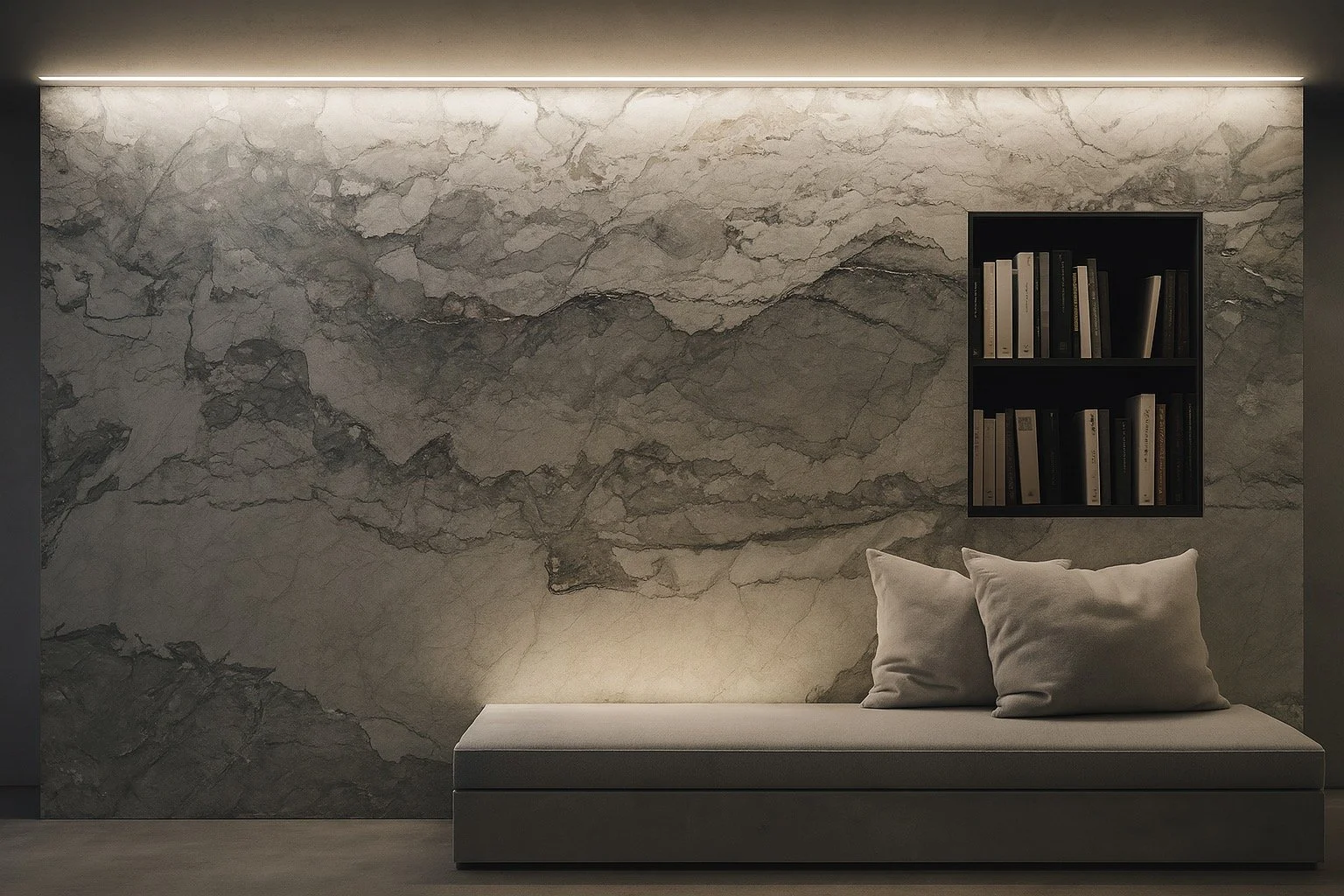
6. Built-In Shelving and Stone Niches
Stone and millwork work exceptionally well together.
A relatively small amount of marble or quartzite can completely change the appearance of a built-in when used as the backing of a niche, the surface of a shelf or the frame around cabinetry.
This is one of the easiest ways to repeat a stone elsewhere in a project.
For example, a designer might use the primary kitchen quartzite again inside the adjoining bar, bookshelf or display niche.
That repetition creates continuity without requiring every surface to match.
It is also an opportunity to introduce contrasting textures.
Try pairing:
Honed marble + dark walnut
Leathered quartzite + warm oak
Travertine + plaster
Dark marble + brushed brass
Natural materials tend to become more interesting when placed next to other natural materials.
7. Stone Doorways, Portals and Architectural Frames
One of the more unexpected applications is also one of the most architectural.
Stone can be fabricated into surrounds for doorways, openings and transitions between rooms.
Instead of thinking about trim as something that has to be painted wood or metal, a stone portal creates a permanent architectural frame.
This works especially well in spaces influenced by European, Mediterranean or highly contemporary architecture.
Limestone and travertine can create a more restrained appearance, while heavily veined marble produces a much stronger statement.
Even a relatively simple opening can suddenly feel significant when it is framed in material.
8. Custom Stone Details
Some of the best stone applications do not fit neatly into a category.
Designers and architects are increasingly looking for ways to create something specific to the project rather than selecting exclusively from ready-made products.
That can include:
Integrated stone sinks
Floating stone vanities
Custom tubs
Stone benches
Shelving
Shower niches
Pedestals
Fireplace hearths
Decorative wall panels
Textured stone surfaces
Reception desks
Dining tables
Side tables
Outdoor architectural elements
This is where material sourcing and fabrication need to be considered together.
A slab may look incredible vertically but require a different structural strategy when fabricated into furniture. Another material may accept a leathered or sandblasted finish beautifully while a different stone is better left honed.
Understanding those characteristics before fabrication gives designers considerably more freedom.
The Finish Matters Almost as Much as the Stone
Selecting the species and color is only part of the process.
Finish can completely change how a stone reads in a room.
Polished
Reflective, saturated and dramatic. Polishing typically deepens color and emphasizes veining.
Honed
Softer and more matte. Honed finishes can give bold stone a more architectural, understated appearance.
Leathered
Textural and tactile. Often particularly effective on stones with movement or mineral variation.
Sandblasted
More dimensional and visually organic. This can be especially interesting for vertical architectural applications.
Custom Textures
Linear textures, fluting and other fabricated surfaces can allow stone to interact with light and shadow rather than relying exclusively on pattern.
Designers should consider finish at the same time they select the slab. The same material can look remarkably different depending on how its surface is treated.
Start With the Slab, Not the Pinterest Photo
There is an important distinction when designing with natural stone.
The slab you select is the design.
A reference image can establish direction, but it cannot guarantee an identical result because natural stone is created through geological processes rather than printed from a pattern.
One Calacatta Viola slab may have expansive burgundy movement while another contains considerably more white space. One Taj Mahal quartzite bundle may lean cream while another carries stronger taupe or gold variation.
That is exactly why viewing slabs in person matters.
Instead of trying to force a natural material to match an inspiration image precisely, designers can identify the characteristics they love and then select a slab that achieves the same feeling.
Look at:
Overall movement
Background color
Vein direction
Scale
Mineral deposits
Contrast
Finish
Translucency
Areas you want the fabricator to feature
The earlier this happens in the design process, the more freedom you have to build around the material.
How to Choose Natural Stone for an Architectural Application
When stone is moving beyond a countertop, selection becomes slightly more involved.
Before purchasing slabs, consider the following.
Application
Will the material be horizontal, vertical, wet, exterior or heavily used?
Different applications have different performance requirements.
Slab Size
Large architectural surfaces may require multiple slabs. Confirm dimensions before selecting the bundle so seams and pattern movement can be planned properly.
Vein Direction
A directional stone may behave completely differently when rotated vertically.
Always look at potential fabrication orientation.
Quantity
If several pieces need to flow together, sequential slabs from the same bundle are typically preferable.
Fabricator Input
Complicated fabrication should involve the fabricator early.
Beautiful design and smart fabrication should happen together.
Natural Stone Should Feel Specific to the Space
The most compelling interiors in 2026 are not necessarily the loudest.
They are the ones where the materials appear intentionally chosen.
Sometimes that means an entire wall of expressive marble.
Sometimes it means a single travertine table in an otherwise minimal room.
Sometimes it is a quartzite fireplace that catches the light differently throughout the day.
Natural stone gives designers something increasingly valuable: a material that cannot be perfectly duplicated.
Every slab introduces its own movement, color and geological history into the project.
The opportunity is no longer simply deciding which stone belongs on the countertop.
It is deciding what else the stone could become.
Explore Natural Stone at Arista Stones
Arista Stones sources marble, quartzite, granite, dolomite, limestone, travertine and specialty natural stones for residential and commercial design projects.
Our slab collections can be explored for traditional countertop applications as well as fireplaces, feature walls, bathrooms, furniture, custom fabrication and architectural details.
Designers, architects, builders, fabricators and homeowners are welcome to visit our showrooms and warehouses in Tempe, Arizona and West Valley City, Utah to view current slabs in person.
If you are working on a project and searching for a particular material, movement, color or finish, our team can also help you explore available and specialty-sourced options.
Explore current materials at Aristastones.com or visit an Arista Stones showroom to begin sourcing for your next project.