Full-Height Stone Backsplashes: The Designer Guide to Using Marble, Quartzite & Natural Stone
Full-Height Stone Backsplashes: The Designer Guide to Using Marble, Quartzite & Natural Stone
A backsplash used to be the finishing detail in a kitchen.
Now, it can be the entire point.
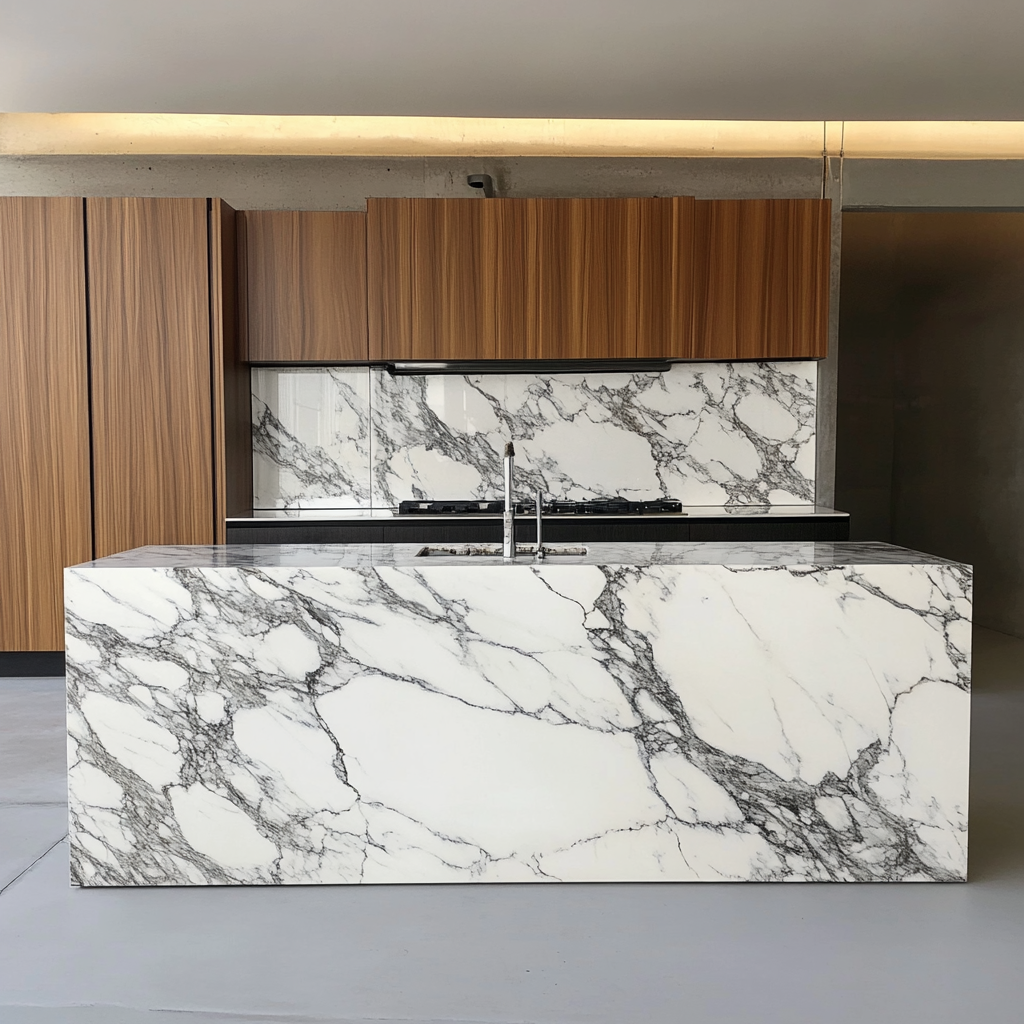
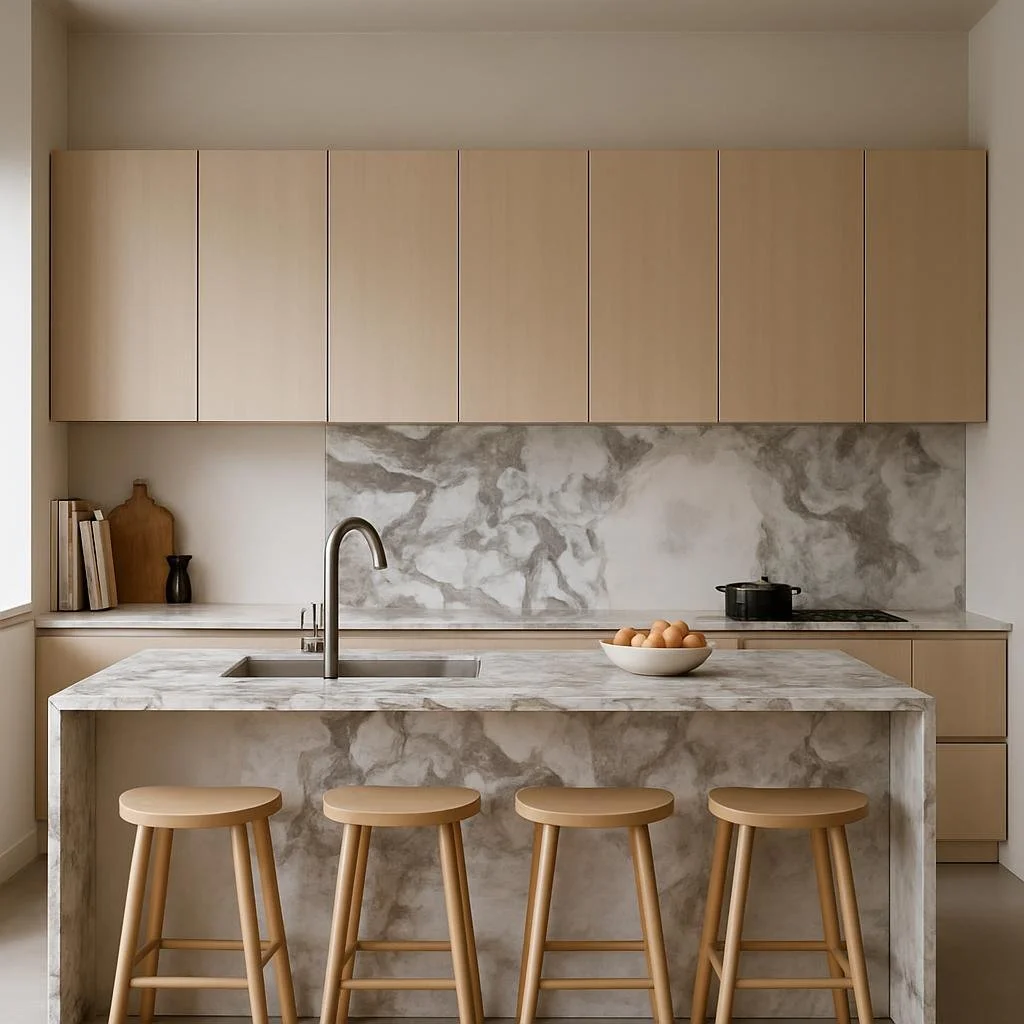
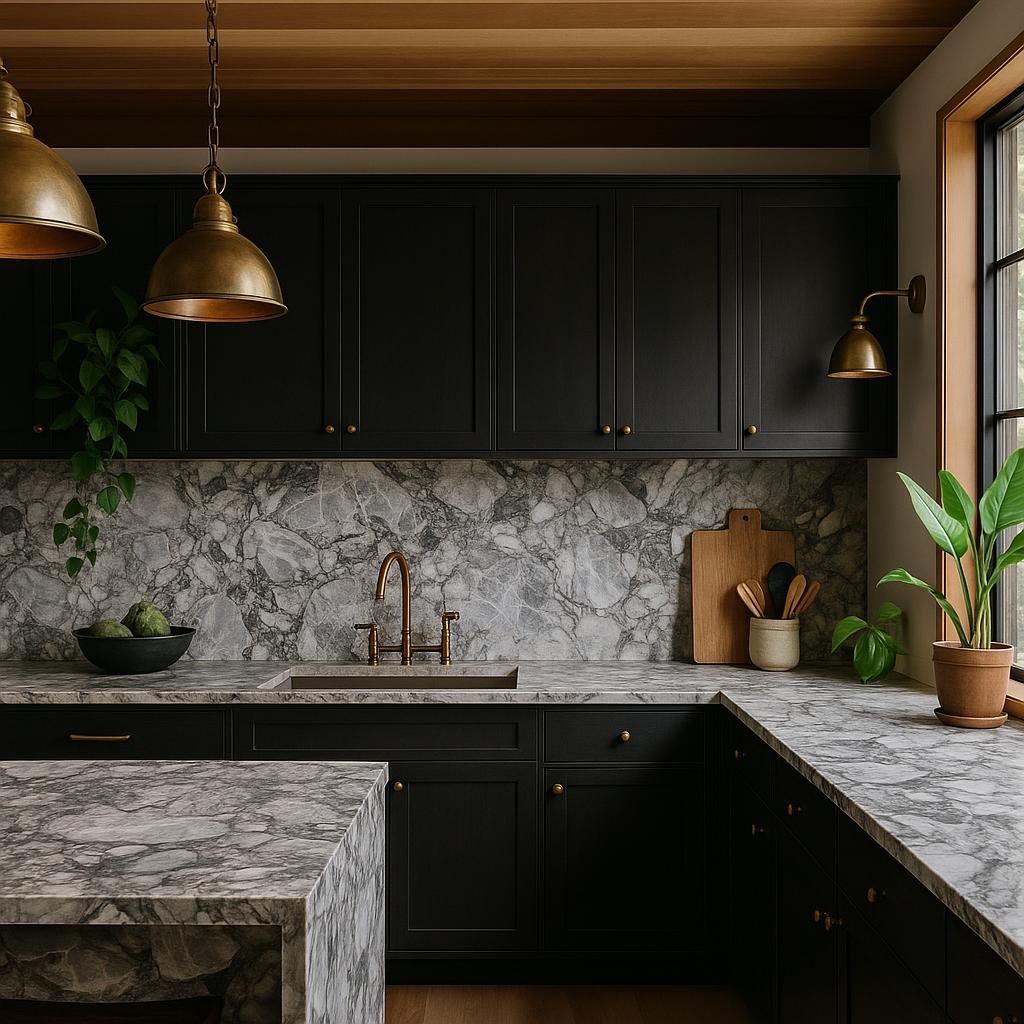
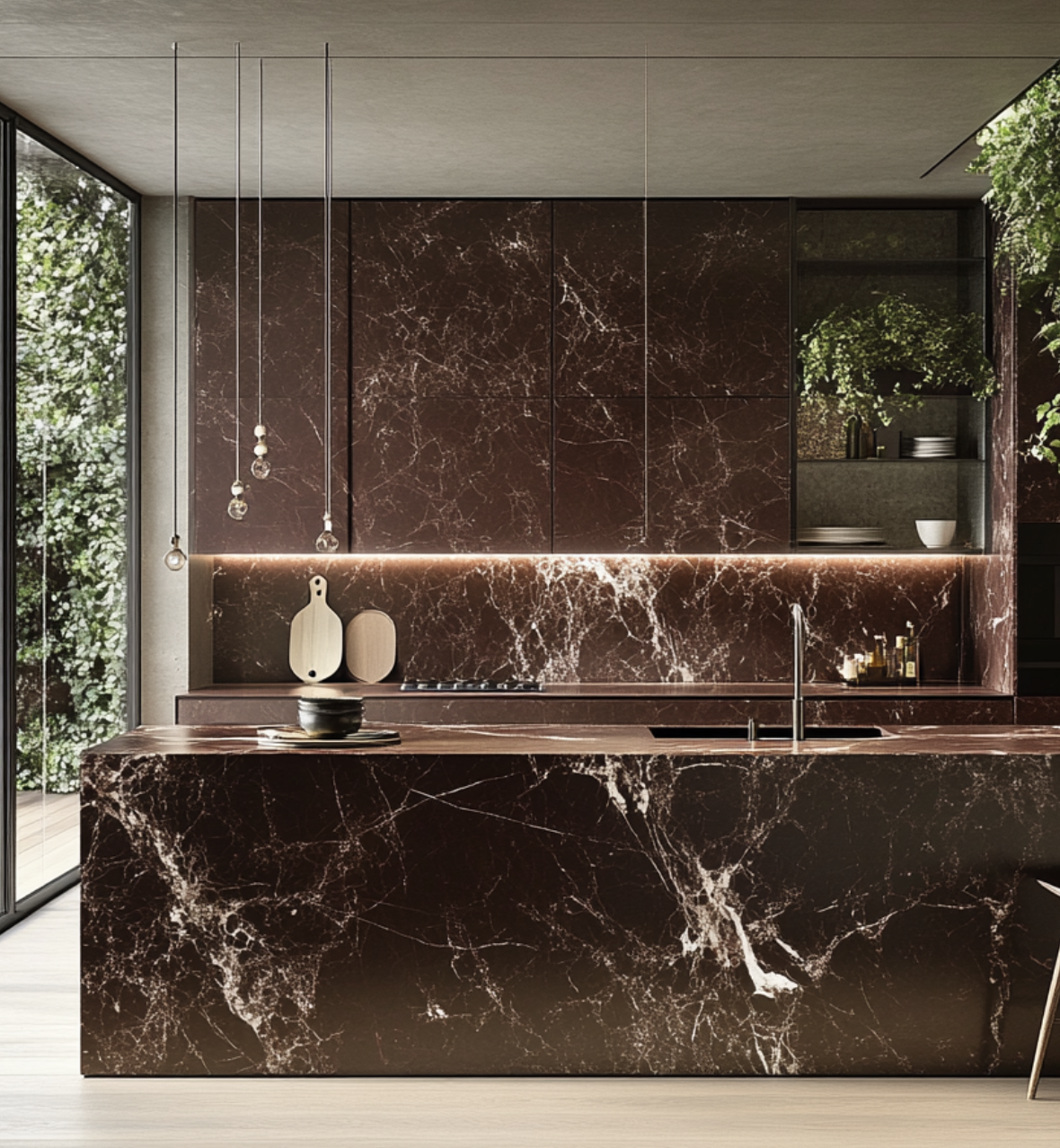
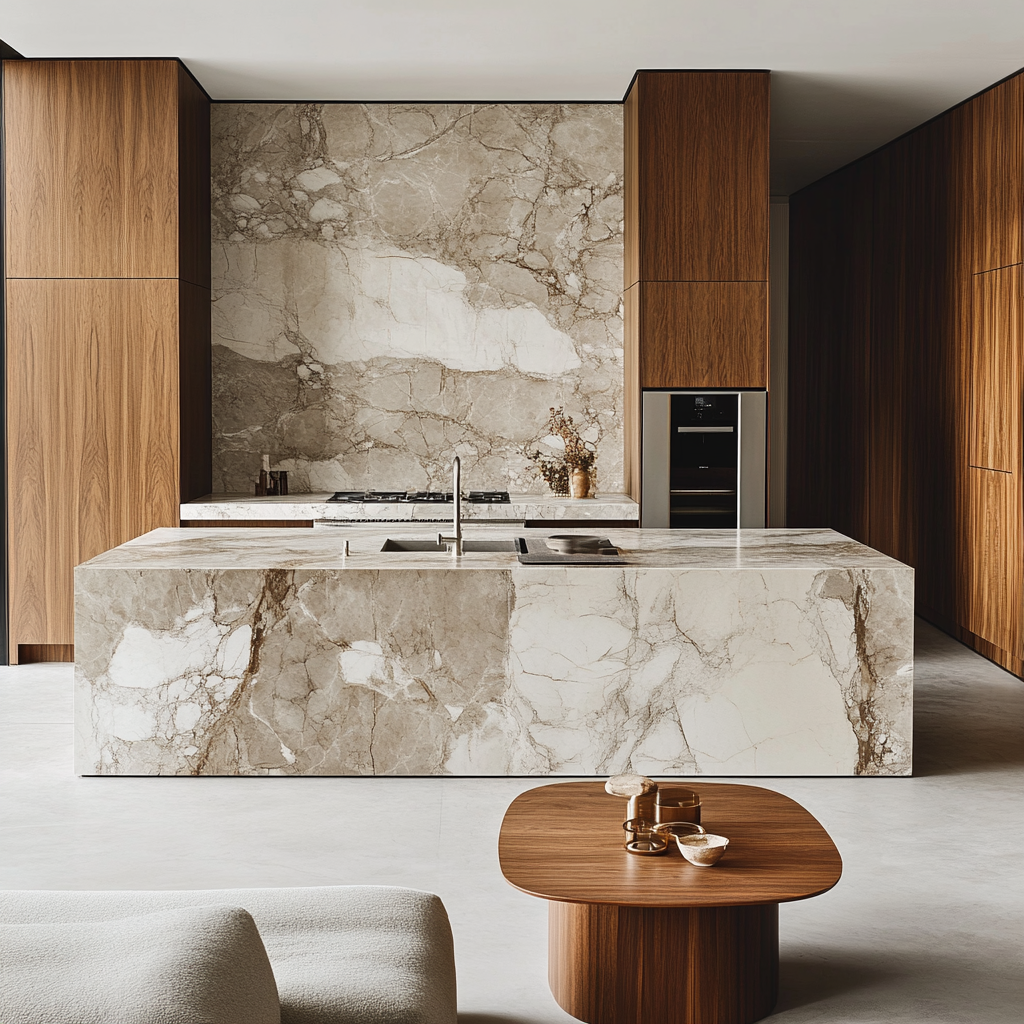
Full-height stone backsplashes are changing the way designers approach kitchens, bars, bathrooms, and other architectural spaces. Instead of interrupting a countertop with tile, grout lines, or another material, a natural stone slab can continue vertically across the wall, allowing its veining, color, and movement to become part of the architecture.
The result can be restrained or dramatic. A softly moving quartzite can create an almost seamless backdrop behind cabinetry. A heavily veined marble can turn the wall behind a range into the visual centerpiece of the room.
And in 2026, the shift toward full-height slab backsplashes is part of a larger movement toward natural materials, more expressive stone, and surfaces with texture and individuality.
If you're considering a stone slab backsplash, here's what to know before selecting your material.
What Is a Full-Height Stone Backsplash?
A full-height stone backsplash replaces a traditional tiled backsplash with a slab or sections of slab material.
Rather than stopping a few inches above the countertop, the stone typically extends:
From the countertop to the bottom of the upper cabinets
Behind a range and up to the hood
Around a kitchen window
Behind floating shelves
Across a bar or coffee station
Or all the way from the countertop to the ceiling
Marble, quartzite, granite, dolomite and other natural stones can all be considered depending on the application and the performance requirements of the space.
The important difference is scale.
With tile, you tend to notice the pattern of the installation.
With a slab backsplash, you notice the stone itself.
Why Are Full-Height Stone Backsplashes So Popular?
One of the biggest shifts we're seeing in kitchen design is the move away from surfaces that feel overly uniform.
Natural stone introduces something manufactured materials cannot perfectly replicate: variation.
Mineral deposits, veining, color changes and geological movement make every slab different.
That individuality becomes especially visible when stone is installed vertically.
Instead of seeing only the relatively narrow surface of a countertop, you're suddenly looking at several feet of uninterrupted material.
Designers are increasingly using natural stone, quartzite, deeper colors and textured or honed finishes to bring more character into kitchens.
A backsplash gives that material room to speak.
Marble vs. Quartzite for a Slab Backsplash
Two of the most requested materials for full-height backsplashes are marble and quartzite.
They can create completely different environments.
Marble Backsplashes
Marble remains one of the most expressive natural stones available.
Depending on the block, marble can feature:
Soft feathered veining
Strong linear movement
Burgundy or violet coloration
Gold and rust mineral deposits
Green movement
Dramatic high-contrast patterns
Because a backsplash is vertical rather than a primary work surface, it can also be an interesting place to use a marble that a homeowner may have hesitated to use across an entire kitchen countertop.
Marble will still require appropriate care, and exposure to cooking oils, acids and other substances should be considered when selecting and sealing the material.
But visually, few materials can compete with a beautifully laid-out marble slab behind a range.
Quartzite Backsplashes
Quartzite is another natural stone frequently selected for kitchens because many varieties combine dramatic natural movement with strong performance characteristics.
Quartzite can range from subtle creams and taupes to blue, green, charcoal and heavily patterned exotic slabs.
Its popularity has continued into 2026 as designers and homeowners look for natural surfaces that balance aesthetics with everyday usability.
For a backsplash, quartzite works particularly well when you want the countertop and wall to read as one continuous composition.
Should Your Countertop and Backsplash Be the Same Stone?
They certainly can be.
And when the right slab is selected, using the same material for both can create one of the strongest installations in the room.
Imagine the veining from a quartzite countertop visually continuing upward behind the range.
Or a marble island paired with a matching marble wall that allows the material to become the central design element.
But matching does not mean the backsplash needs to look identical to the countertop.
Natural stone is inherently variable.
Even consecutive slabs from the same bundle can have differences in movement, color and mineral pattern.
That is why slab selection and layout matter.
When you're choosing material for both countertops and a backsplash, look at the slabs together and think about how the movement could transition from horizontal to vertical surfaces.
The Most Important Part: Slab Layout
Choosing the stone is only half of the design.
The next question is:
Which part of the slab goes where?
A natural stone slab can look completely different depending on how it is cut.
A dramatic vein could:
Run directly through the center of the range wall
Move diagonally toward the hood
Frame a window
Continue through a waterfall edge
Become the focal point of an island
Or disappear entirely if the layout isn't considered before fabrication
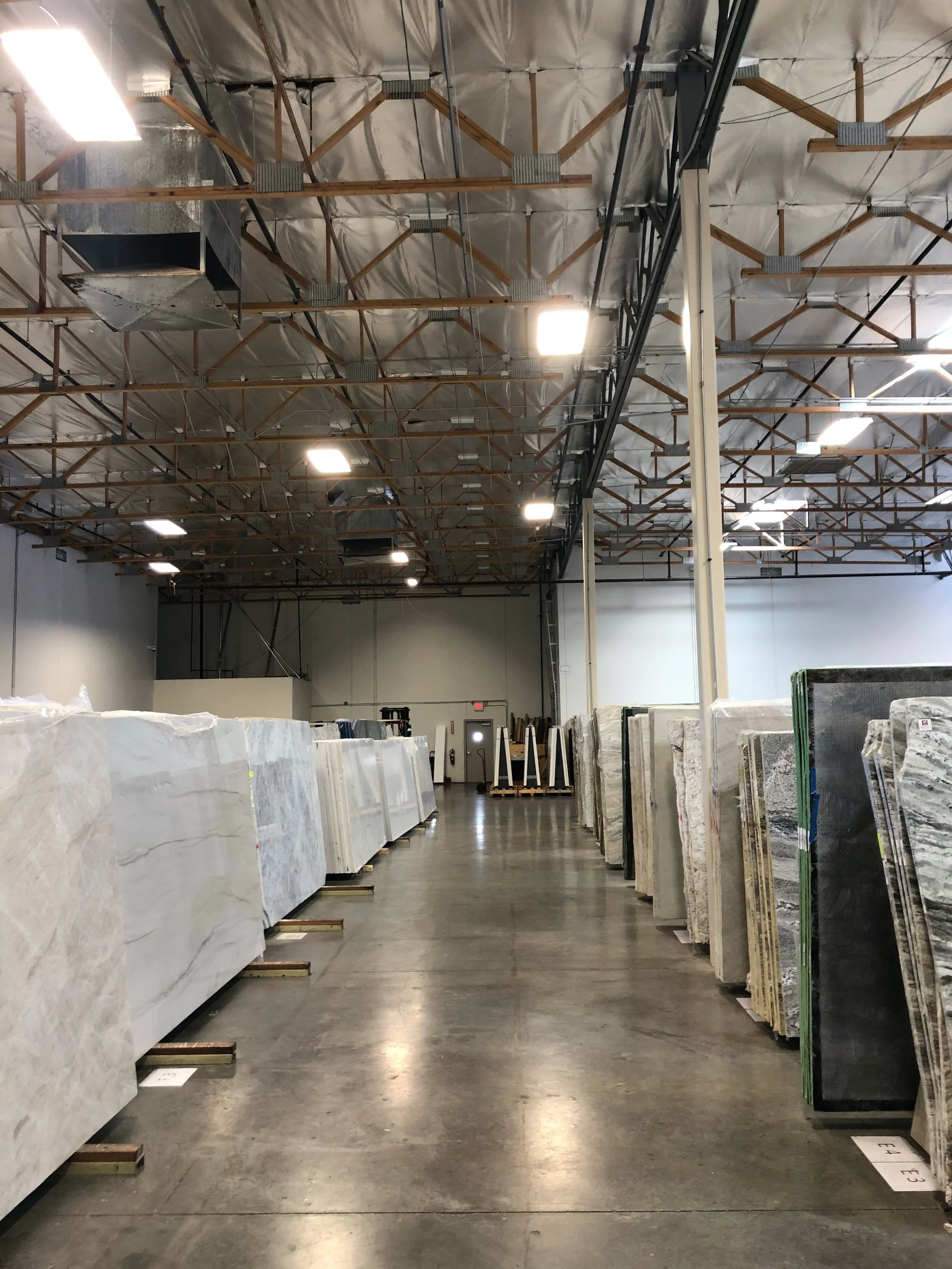
This is why we recommend viewing full slabs rather than selecting natural stone from a small sample.
A sample tells you the color.
A slab tells you the composition.
At Arista Stones, we recommend stepping back from the slab during selection so you can understand its overall movement before focusing on the details up close.
For statement applications such as backsplashes, fireplaces and feature walls, this becomes especially important.
Consider the Range Wall First
If you're using a full-height backsplash in a kitchen, the wall behind the range is often the most important area to plan.
It tends to be:
Highly visible
Relatively symmetrical
Centrally located
Framed by cabinetry or a hood
That makes it a natural location for the strongest portion of the slab.
Before fabrication, look at where the range, hood, outlets and shelving will sit in relation to the stone.
A few inches can completely change how a vein appears once installed.
The goal isn't necessarily perfect symmetry.
The goal is intention.
What About Outlets?
Outlets are one of the least glamorous conversations in a kitchen remodel.
They are also one of the details that can make or break a slab backsplash.
Before the stone is fabricated, coordinate outlet placement with your designer, contractor and fabricator.
Depending on local code requirements and the design of the kitchen, your team may be able to consider locations such as:
Under upper cabinetry
Integrated outlet systems
Less visually prominent portions of the backsplash
Carefully aligned positions within the slab layout
The fewer unnecessary visual interruptions in a dramatic piece of stone, the better the finished composition will read.
Always have electrical placement reviewed by qualified professionals and according to applicable local code.
Honed or Polished?
Finish can completely change how a stone feels.
Polished Stone
A polished finish reflects more light and typically emphasizes color, depth and veining.
It can feel glamorous and dramatic, particularly with highly figured marble or quartzite.
Honed Stone
Honed stone has a softer, more matte appearance.
The lower sheen can make a kitchen feel more relaxed and architectural rather than glossy.
Matte and honed surfaces continue to be prominent in current kitchen design, alongside other textured natural-stone finishes.
Neither is automatically better.
The right finish depends on the material, lighting and overall design direction.
Don't Ignore Slab Thickness
Countertops and vertical applications do not always need to be approached identically.
Depending on the stone, installation and fabrication requirements, your fabricator may recommend different thicknesses or installation methods for a backsplash.
This is something to determine before ordering material.
Your stone supplier can help you select the slabs, but the project's fabricator should confirm final quantities, thickness requirements, seam placement and installation feasibility.
How Much Stone Do You Need for a Slab Backsplash?
This is where homeowners sometimes make a costly mistake.
They calculate the visible square footage and assume that's exactly how much material they need.
Natural stone doesn't work that way.
Fabrication must account for:
Slab dimensions
Vein direction
Countertop pieces
Backsplash dimensions
Cutouts
Seams
Edge details
Desired movement
Potential breakage or fabrication requirements
Sometimes the most visually successful layout requires more material than the absolute mathematical minimum.
Always have your fabricator create the final slab requirement before purchasing.
Can You Bookmatch a Stone Backsplash?
Yes, depending on the material and available slabs.
Bookmatching places two adjoining slabs so their movement mirrors across a seam, creating an almost symmetrical composition.
It can be especially striking with highly figured marble or quartzite.
But not every stone needs to be bookmatched.
Some of the most beautiful installations rely on uninterrupted organic movement rather than symmetry.
Before deciding, look at the actual slabs.
The material usually tells you which direction makes the most sense.
Other Places to Use a Full-Height Stone Slab
The kitchen backsplash is only one application.
Natural stone slabs can also be used vertically in:
Coffee Bars
A small coffee or beverage station is one of the easiest places to use a more dramatic stone without committing to an entire kitchen.
Butler's Pantries
A secondary space gives designers more freedom to introduce darker, richer or more expressive materials.
Bathroom Vanities
Continuing stone from a vanity onto the wall creates an elevated alternative to traditional tile.
Fireplace Surrounds
Large-format natural stone allows the pattern of the slab to become part of the architecture.
Bars
A bold marble, quartzite or translucent stone can create an immediate focal point.
Feature Walls
Bookmatched or heavily figured slabs can function almost like large-scale artwork.
Choosing the Right Slab
When shopping for a backsplash, don't just ask:
Does this stone match my cabinets?
Ask:
What will this slab look like when I see four feet of it vertically?
Look at the material from several feet away.
Notice where your eye naturally goes.
Look for:
Strong focal areas
Veins you want to preserve
Sections you may want behind the range
Areas that could work for countertops
Color variation across the slab
Potential bookmatching opportunities
Natural stone selection is part material choice and part composition.
That is what makes it different.
See the Slab Before You Design Around It
Pinterest is useful for understanding a direction.
It shouldn't be treated as a stone catalog.
Natural stone isn't printed.
Two slabs with the same geological classification or trade name can still look noticeably different.
If you fall in love with a kitchen online, focus on why you like it.
Is it the warm undertone?
The scale of the veining?
The low contrast?
The burgundy movement?
The honed finish?
Once you know what you're responding to, you can look for a slab with those characteristics rather than trying to duplicate another project's exact stone.
Shop Natural Stone Slabs at Arista Stones
Arista Stones sources natural stone from around the world for designers, architects, builders, fabricators and homeowners looking for materials beyond the expected.
Our slab inventory includes marble, quartzite, granite, dolomite, limestone, travertine and other specialty natural stones, along with large-format surfaces for residential and commercial projects.
Visit our Tempe, Arizona or Salt Lake City, Utah showroom to see full slabs in person and select material for your kitchen, backsplash, bathroom, fireplace or custom project.
Bring your cabinet sample.
Bring your flooring.
Bring the screenshot you've had saved for six months.
And most importantly, come see the stone at full scale.
Because the backsplash doesn't have to be the background.
Sometimes it should be the reason you remember the room.
Frequently Asked Questions
Is a full-height stone backsplash a good idea?
A full-height stone backsplash can be an excellent option when you want fewer visual interruptions and more emphasis on the natural material. The right stone depends on the location, expected use, maintenance preferences and overall design.
What stone is best for a kitchen backsplash?
Marble, quartzite, granite and other natural stones can all be used depending on the project. Quartzite is frequently selected for kitchens, while marble can create particularly expressive feature walls and range backsplashes. Always discuss the specific slab and application with your fabricator.
Can quartzite be used as a backsplash?
Yes. Quartzite can be used for countertops and vertical backsplash applications, allowing the same stone to continue across multiple surfaces.
Can marble be used behind a stove?
Marble is frequently used for range backsplashes, but installation details, sealing, maintenance and the specific cooking environment should be discussed with your fabricator and installer.
Should the backsplash match the countertop?
It can, but it doesn't have to. Using the same slab material can create a cohesive architectural look, while selecting a contrasting stone can make the backsplash a separate design feature.
Is a slab backsplash more expensive than tile?
It can be, particularly when additional slabs are needed to achieve a specific vein layout. Cost depends on the material, slab dimensions, fabrication, installation and complexity of the project.