The All-White Kitchen Is Over: 7 Stone Trends Defining 2026
There was a time when the formula for a “luxury kitchen” felt almost predetermined.
White cabinets. White countertops. Pale backsplash. Minimal movement.
In 2026, that formula is changing.
The most interesting interiors right now aren't trying to make natural stone disappear into the background. They're designing around it.
Stone is becoming warmer, stranger, richer and considerably more expressive. Designers are letting slabs dictate cabinet colors, metals, millwork and sometimes the entire personality of a room.
Here are seven natural stone trends we're watching closely.
1. The Statement Slab Is Becoming the Starting Point
Instead of choosing stone after the cabinetry, we're seeing more projects begin with one extraordinary slab.
And we think that's exactly how some of the best rooms should be designed.
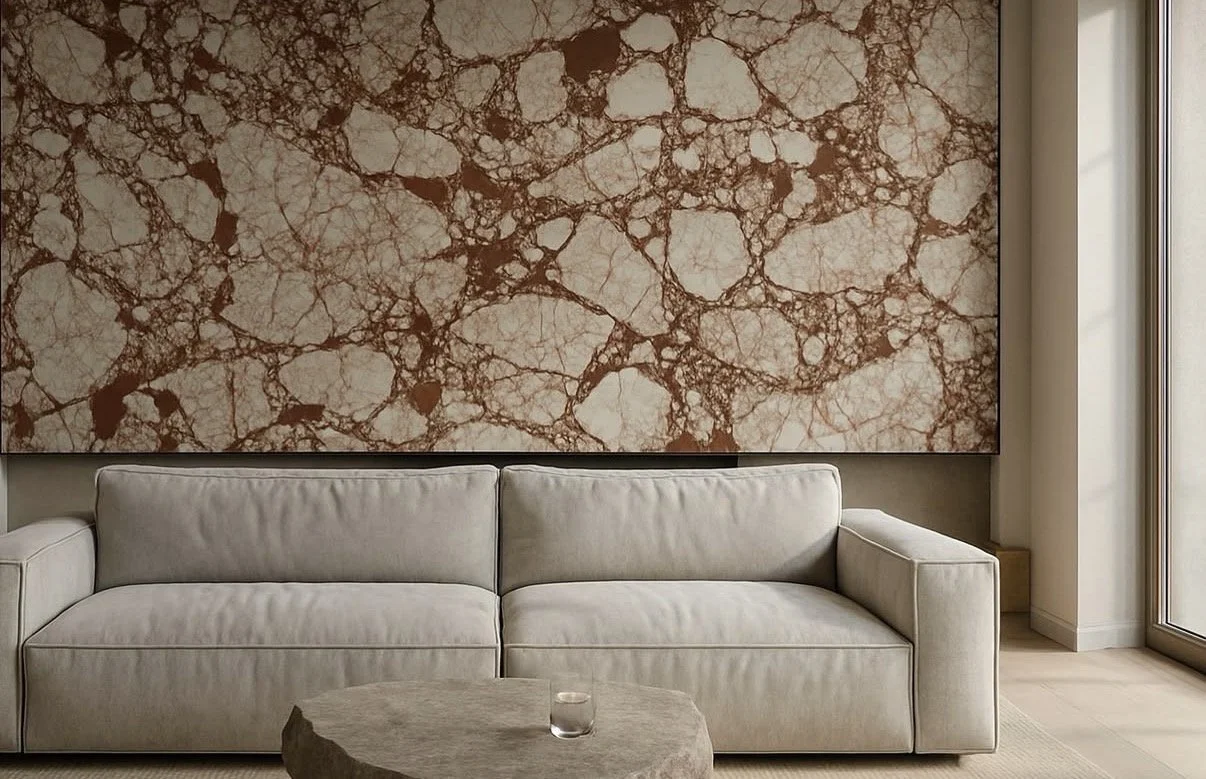
A dramatic quartzite, heavily figured marble or unusual granite can establish the entire palette of a kitchen before a cabinet color is ever selected.
Pull the cream from the background.
Repeat the oxblood in the veining.
Choose hardware that complements the warmer mineral tones.
Let the stone tell you where the room wants to go.
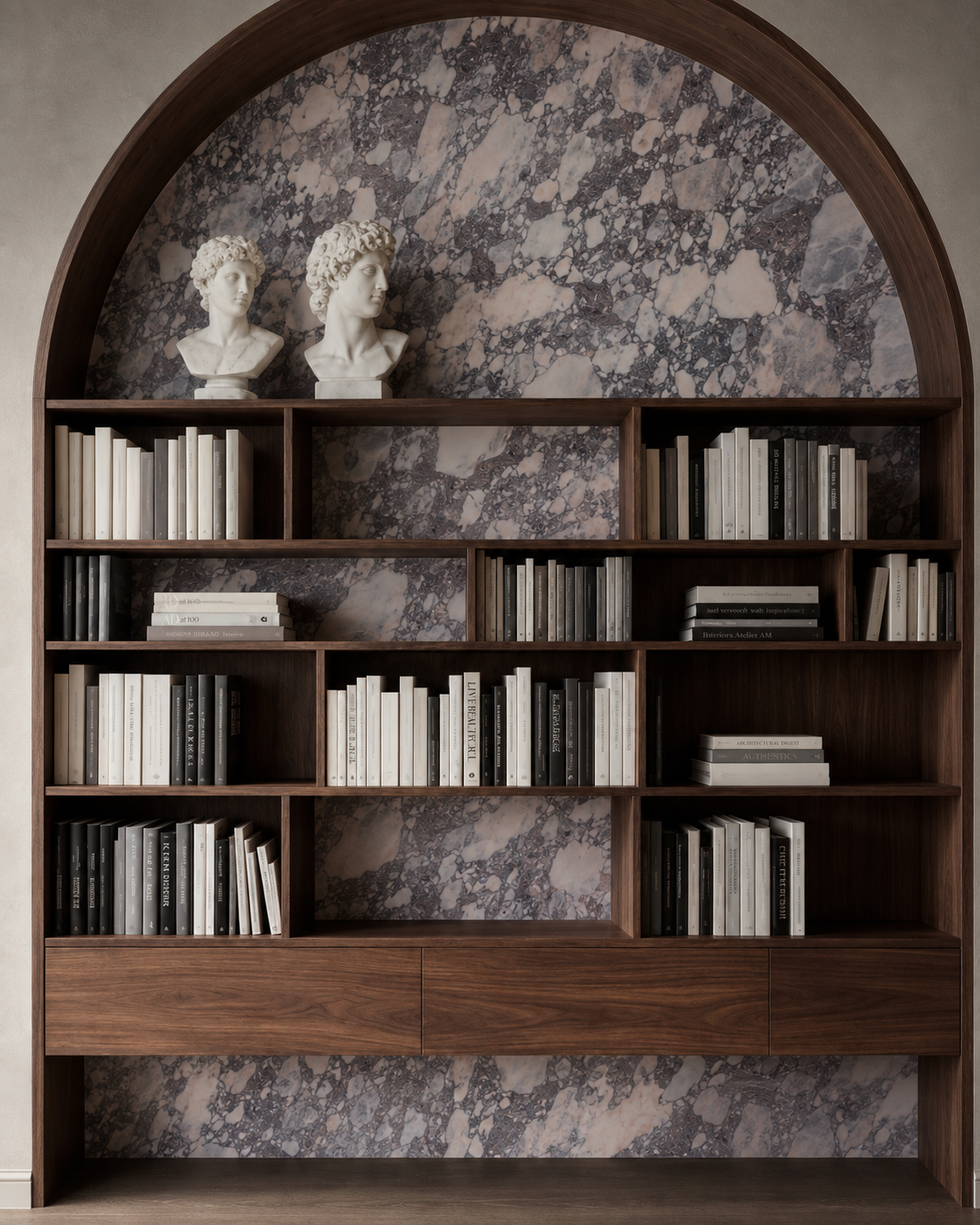
Materials like Calacatta Viola, Breccia, richly colored quartzites and expressive granites aren't supporting characters anymore.
They're the reason the room exists.
2. Quartzite Continues to Have a Major Moment
Search for luxury kitchens long enough and you're almost guaranteed to encounter quartzite.
There's a reason.
Quartzite can deliver the sweeping movement and depth people often associate with marble while bringing an entirely different geological character to a space.
But the quartzite category is much larger than the creamy neutrals most homeowners recognize.
You'll find icy crystalline slabs, rust-colored movement, deep greens, blue-greys, golds, blacks and materials that look almost like landscapes viewed from above.
Taj Mahal quartzite remains one of the most recognizable choices, but designers willing to move beyond the familiar are discovering an enormous world of quartzite.
And that's where things get interesting.
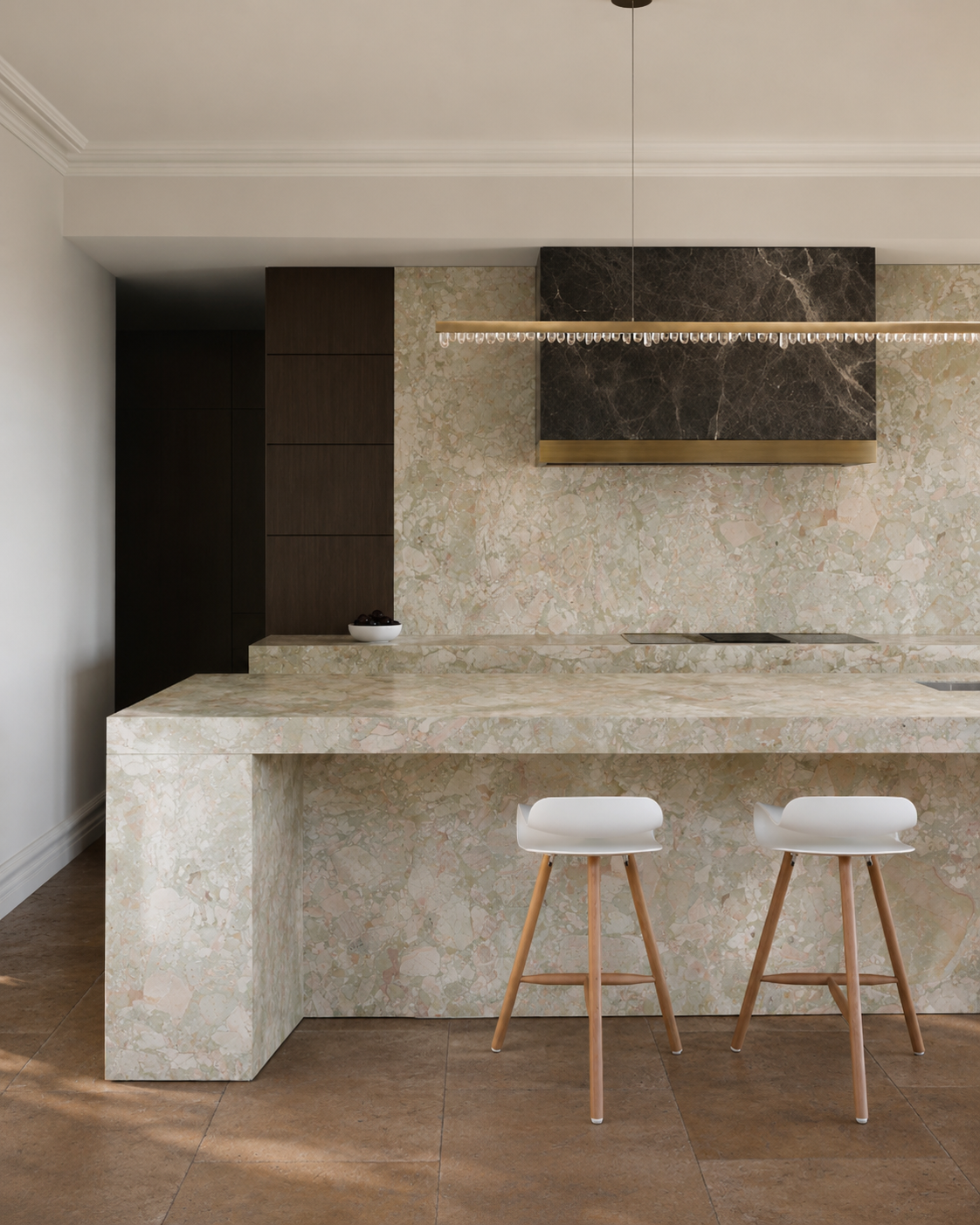
3. Full-Height Stone Backsplashes Aren't Going Anywhere
The four-inch countertop backsplash has officially lost the plot.
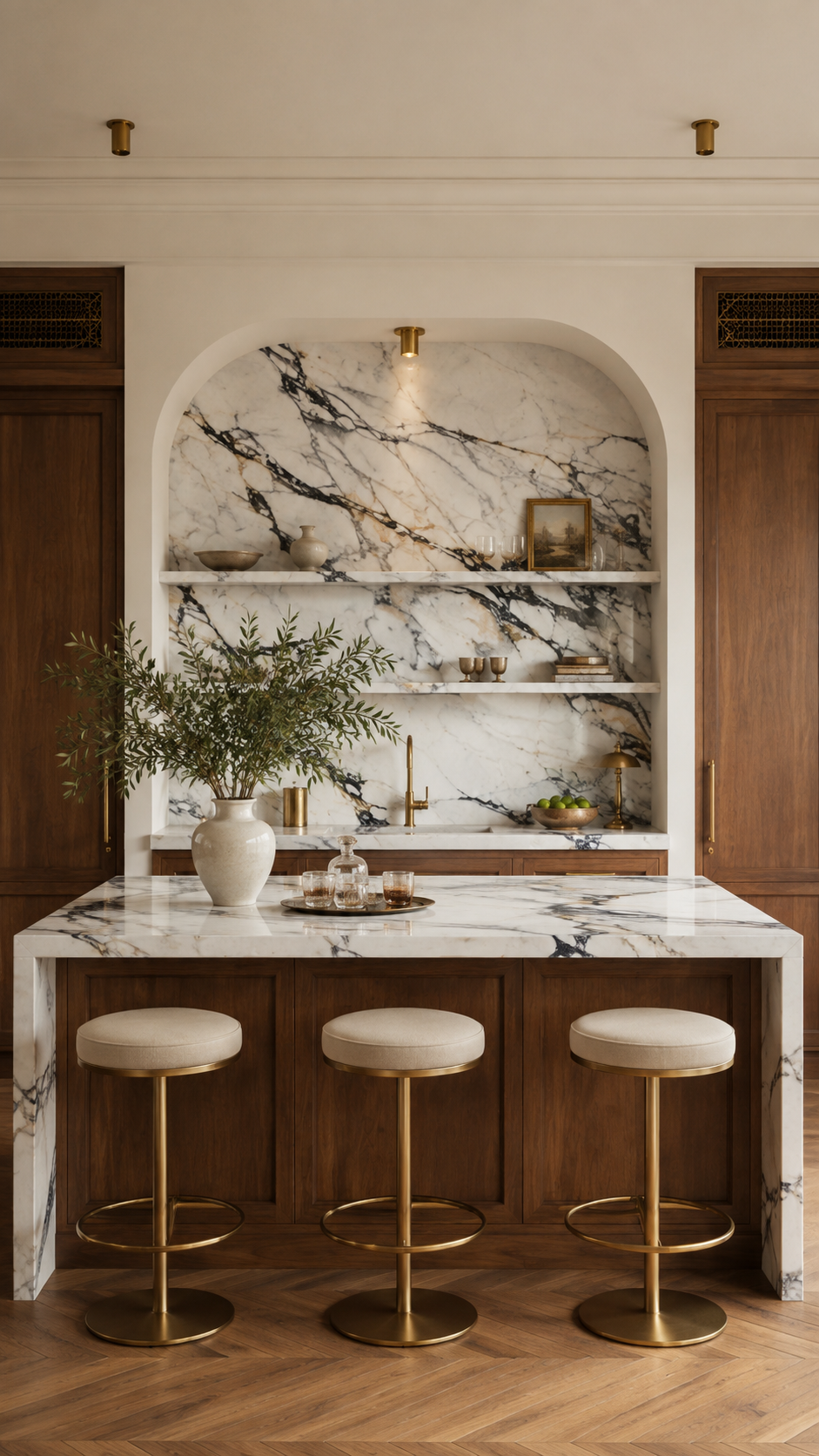
More kitchens are allowing the countertop material to continue vertically up the wall, creating one uninterrupted composition.
Sometimes it stops beneath the upper cabinets.
Sometimes it travels behind open shelving.
And sometimes the slab goes all the way to the ceiling.
The result feels architectural rather than decorative.
With natural stone, the application becomes even more interesting because the veining can be intentionally positioned, mirrored or bookmatched to turn the wall into something closer to an installation.
Design tip: If you know you want a full-height backsplash, select your slabs with the backsplash in mind. That beautiful section of movement might deserve the wall rather than the island.
4. Warm Stone Is Replacing Clinical White
White isn't disappearing.
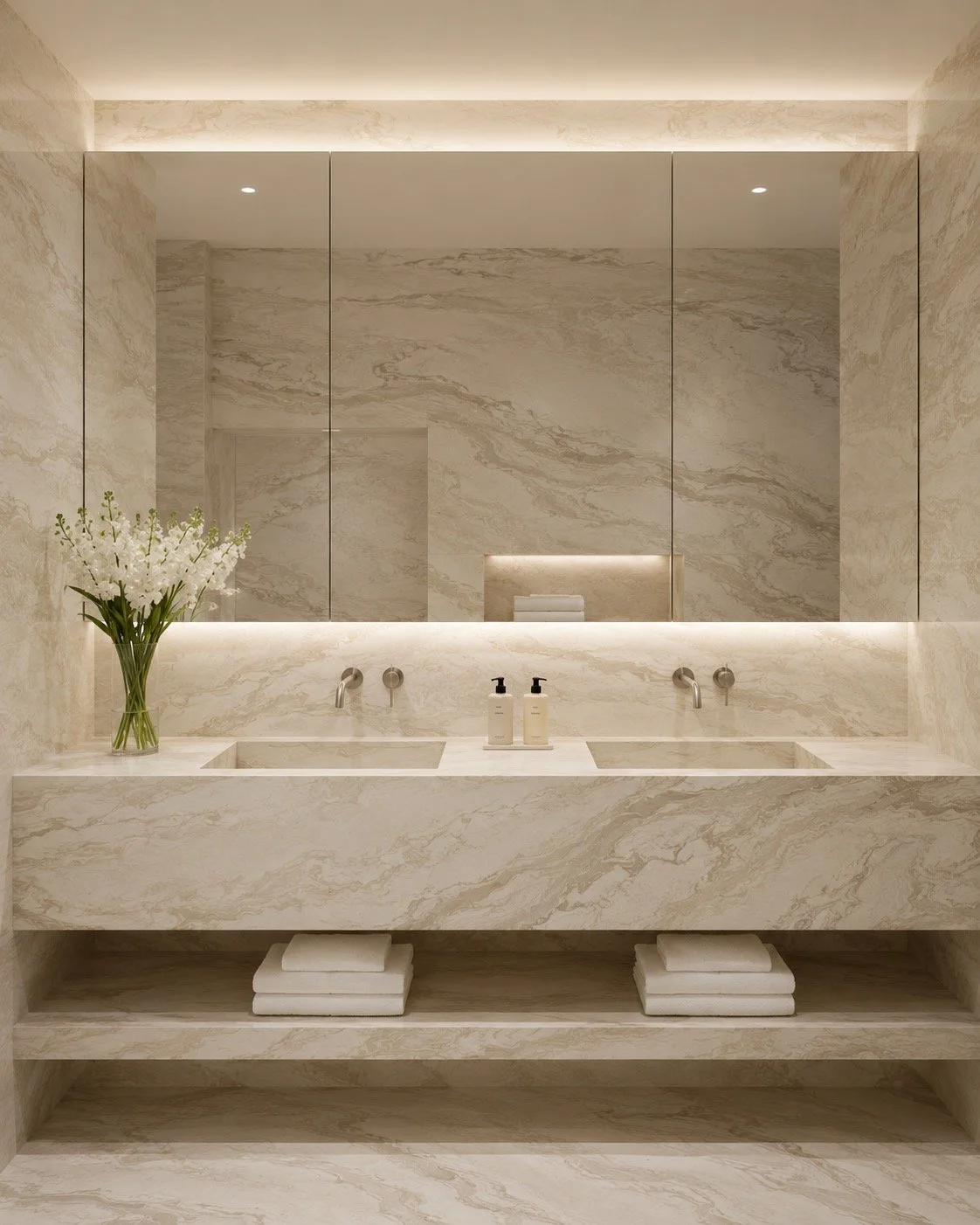
But the icy, blue-white interiors that dominated for years are giving way to something warmer.
Think:
Cream.
Bone.
Sand.
Caramel.
Taupe.
Tobacco.
Burgundy.
Chocolate.
Soft green.
Warm gray.
Stone with tonal complexity makes even a minimalist room feel layered.
This is where materials like limestone, travertine, warm marble, dolomite and creamy quartzites become especially compelling.
They're neutral without being blank.
5. Dark Stone Is Back
One of our favorite shifts is the return of darker surfaces.
Black marble.
Espresso quartzite.
Deep green granite.
Charcoal stone.
Burgundy movement.
Dark surfaces instantly add weight to a room, particularly when paired with walnut, plaster walls, unlacquered brass or warmer lighting.
And you don't have to commit to an entirely dark kitchen.
Try a dark stone island against lighter perimeter cabinetry.
Use it on a fireplace.
Wrap a powder room vanity.
Create a stone bar.
The contrast can completely change the architecture of the space.
6. Texture Matters Almost as Much as Color
A slab shouldn't only be considered from across the room.
It should be considered from six inches away.
Honed, leathered, brushed, sandblasted and other dimensional finishes are creating surfaces that feel much more tactile than the highly polished countertops many people associate with stone.
The finish can completely change the personality of the material.
A polished marble might feel formal.
Hone the same material and suddenly it becomes softer and more architectural.
Add texture to another stone and it may begin to resemble something excavated from an old European building.
Same geology.
Entirely different feeling.
7. Perfectly Imperfect Stone Is Winning
Perhaps the biggest shift isn't a specific color or material.
It's the willingness to embrace variation.
Natural stone isn't printed.
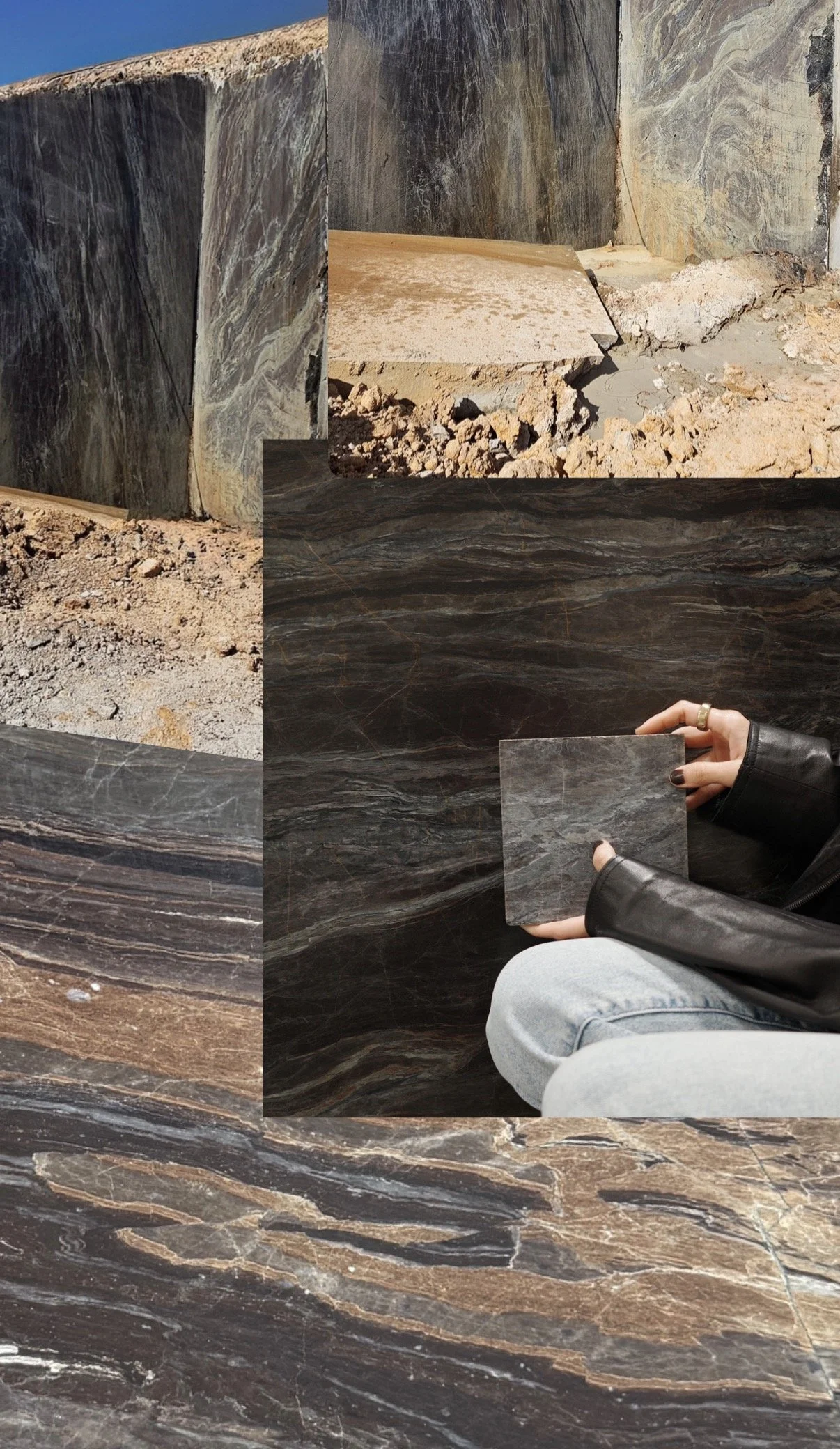
Two slabs from the same quarry can contain different veining, mineral deposits, fossils, fissures, color concentrations and movement.
That's the point.
A Pinterest photo can help establish a direction, but it cannot promise that the slab you find will look exactly the same.
And it shouldn't.
Natural stone was created by geological processes over millions of years. Every block removed from the earth records that history differently.
The most beautiful projects don't fight those differences.
They design around them.
What Stone Should You Choose in 2026?
Ignore the trend report for a moment.
The better question is:
What material makes you stop walking when you see it?
Natural stone can last through countless design cycles. Choosing something simply because it's currently popular misses the best part of shopping for it.
Walk the slabs.
Look at the entire surface.
Touch the finish.
Notice what your eye keeps returning to.
Then build from there.
Because the best stone doesn't just coordinate with the room.
It gives you a reason to design one.
Shop Natural Stone at Arista Stones
Visit Arista Stones to explore natural stone slabs including marble, quartzite, granite, dolomite, limestone, travertine and more.
Our slab galleries serve homeowners, interior designers, architects, builders and fabricators looking for materials that go beyond the expected.
Visit our Tempe, Arizona or West Valley City, Utah locations to see current inventory in person.
Appointments are recommended for the best stone-selection experience.