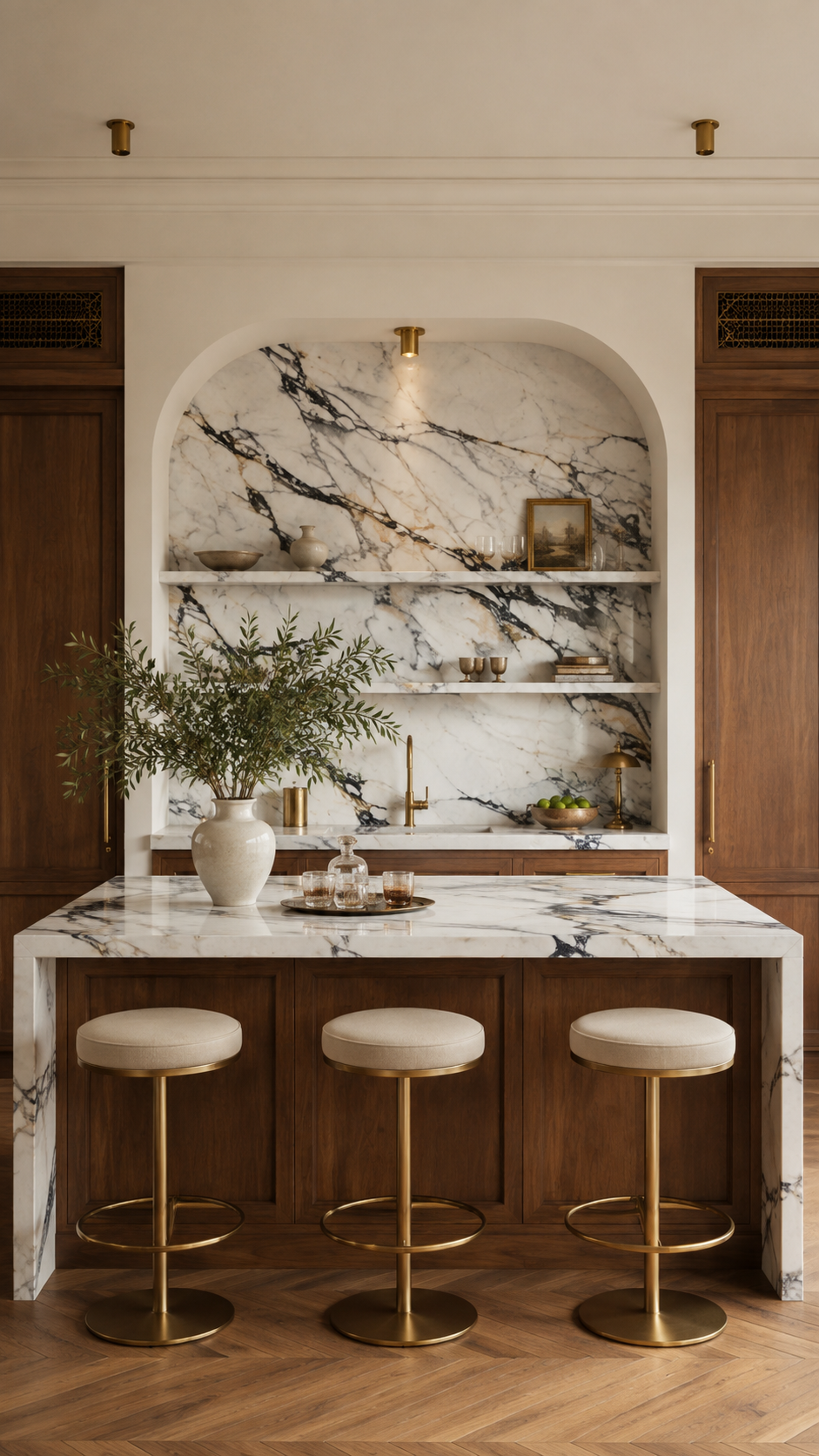
How to Choose Natural Stone for Your Home: What to Look for Before You Buy a Slab
Choosing natural stone for a kitchen, bathroom, fireplace, bar, or other architectural surface usually starts with appearance, but there is much more to consider than whether you like the color of a slab. Marble, quartzite, granite, limestone, travertine, and dolomite are all natural materials with different characteristics, and even slabs within the same stone variety can vary significantly in movement, tone, finish, and overall appearance.
At Arista Stones, one of the biggest things we encourage clients to do is slow down during the selection process and look at the actual material rather than choosing exclusively from a small sample, photograph, or material name. Natural stone is quarried from the earth, and the variation that comes with it is part of what makes it worth using. Understanding that variation before fabrication makes it much easier to choose a material that works with the design of the home and with the way the surface will actually be used.
Start With How the Material Will Be Used
The best natural stone for a project depends heavily on the application. A stone selected for a powder room vanity does not necessarily need to meet the same performance expectations as a hardworking kitchen island, and a fireplace surround has different requirements than an outdoor kitchen.
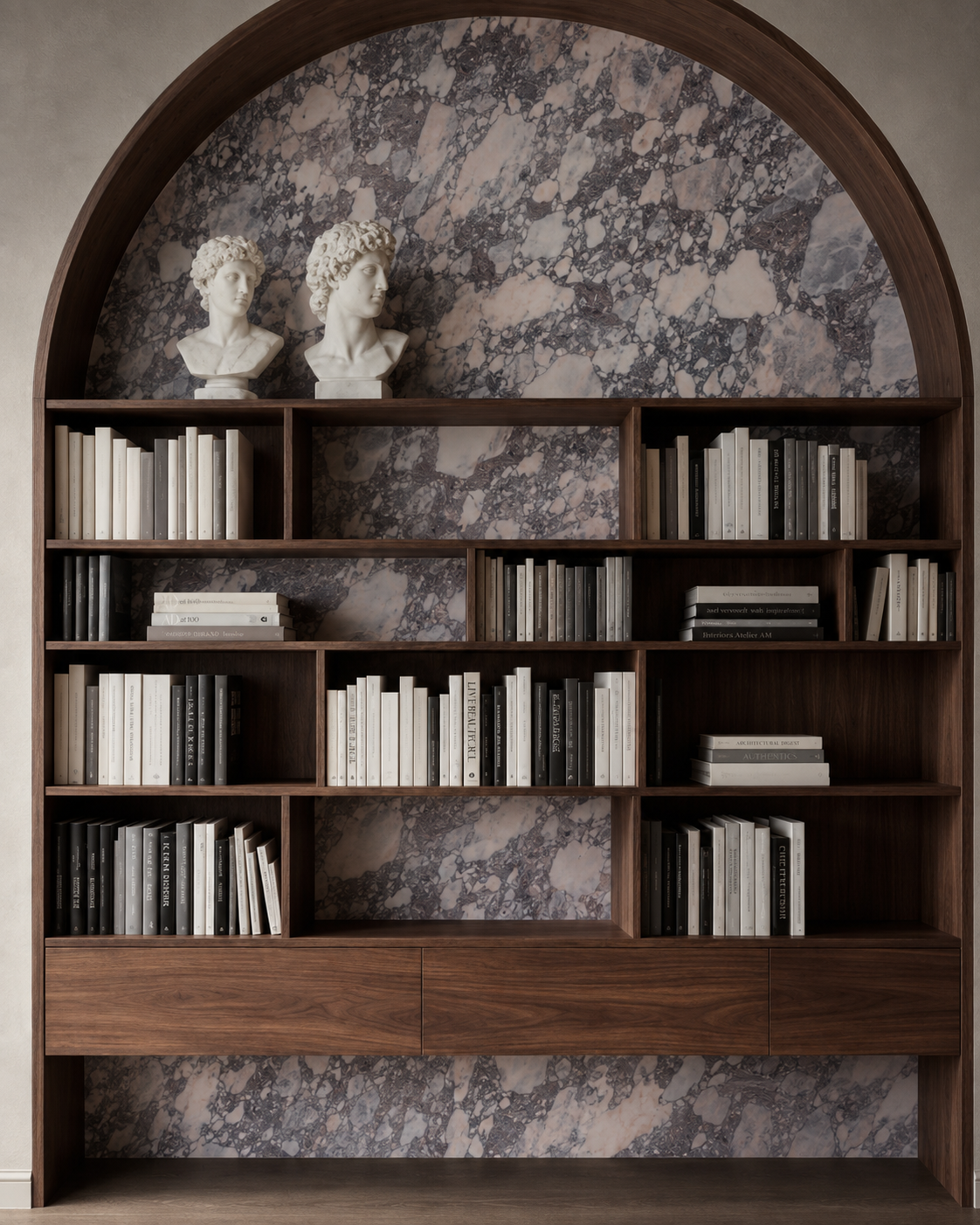
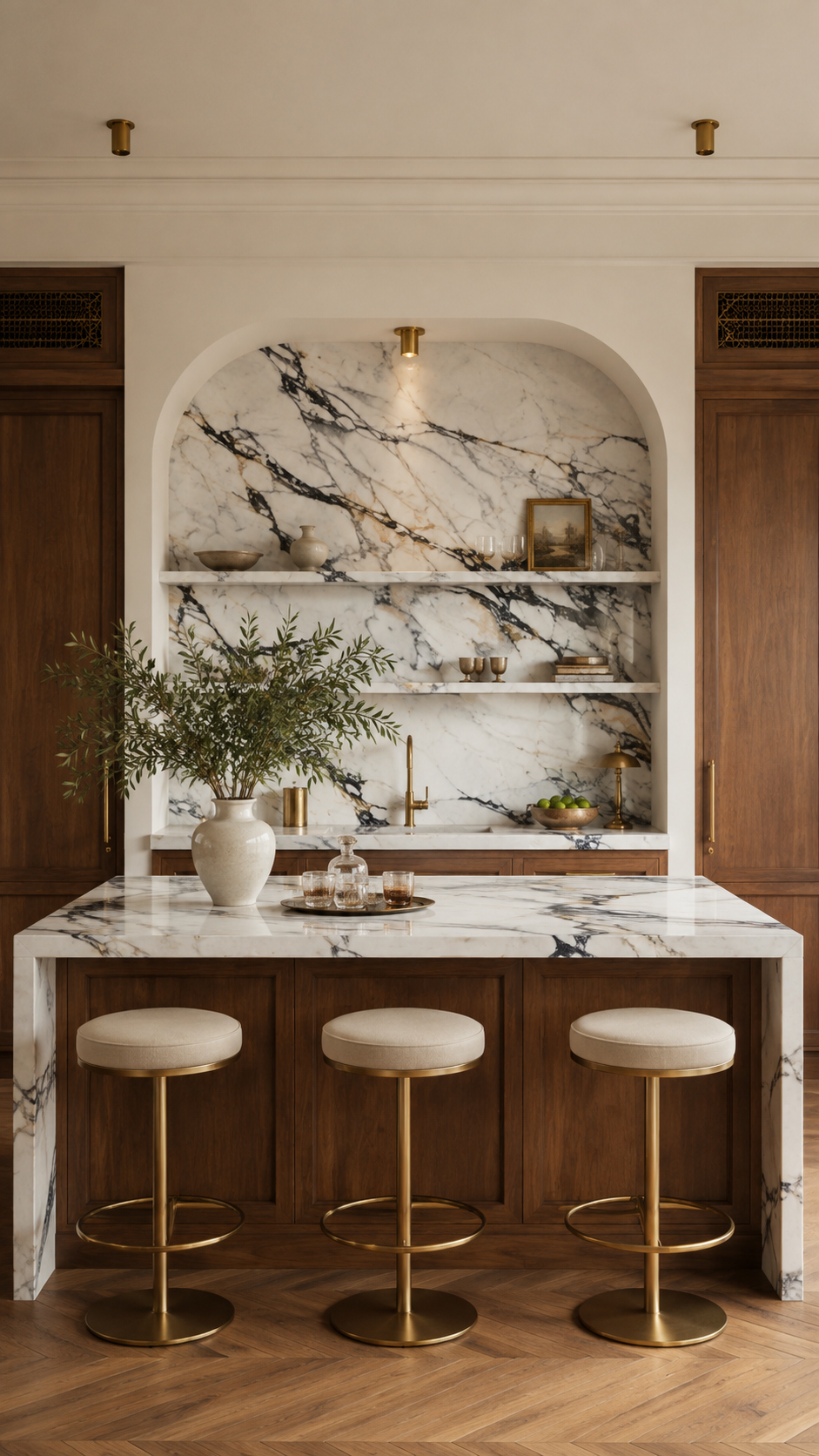
Quartzite is often considered for kitchens because of its durability and the range of colors and movement available within the category. Granite is another durable natural stone with enormous variation, from subtle and nearly monochromatic slabs to materials with dramatic mineral deposits and movement. Marble remains one of the most distinctive materials available for interiors, particularly when the goal is softness, depth, and natural patina rather than a surface expected to remain visually unchanged over time.
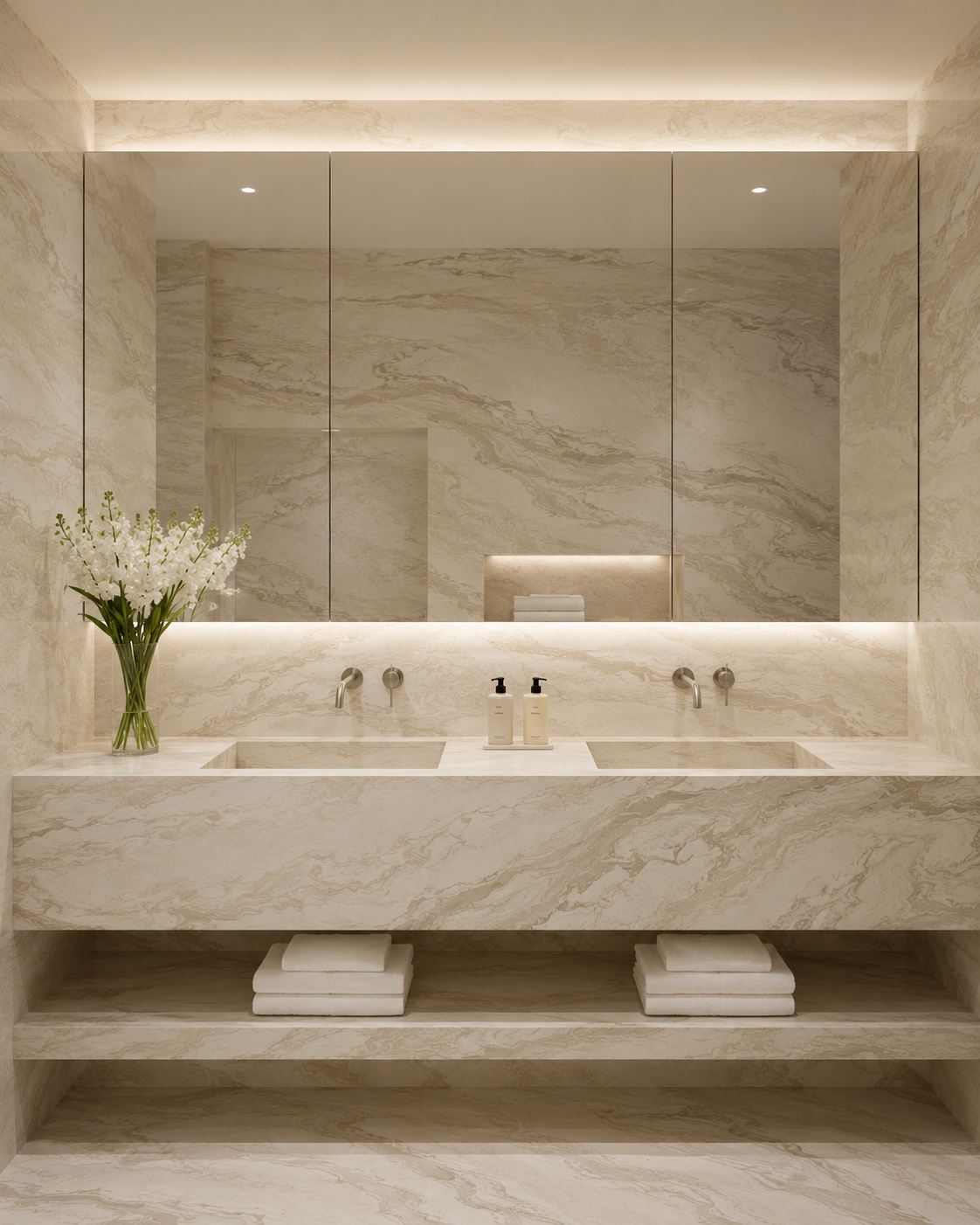
Limestone and travertine bring a different character entirely. Their softer movement, warmer coloring, fossils, pits, and sedimentary details can work particularly well in homes where the design calls for something more organic and less polished. Dolomite can sit somewhere visually between marble and quartzite depending on the specific material, although its properties should always be discussed individually rather than assuming every stone within a category will perform identically.
This is one reason we prefer discussing the actual slab and project with a client rather than recommending materials based solely on a broad stone category.
Look at the Entire Slab, Not Just a Sample
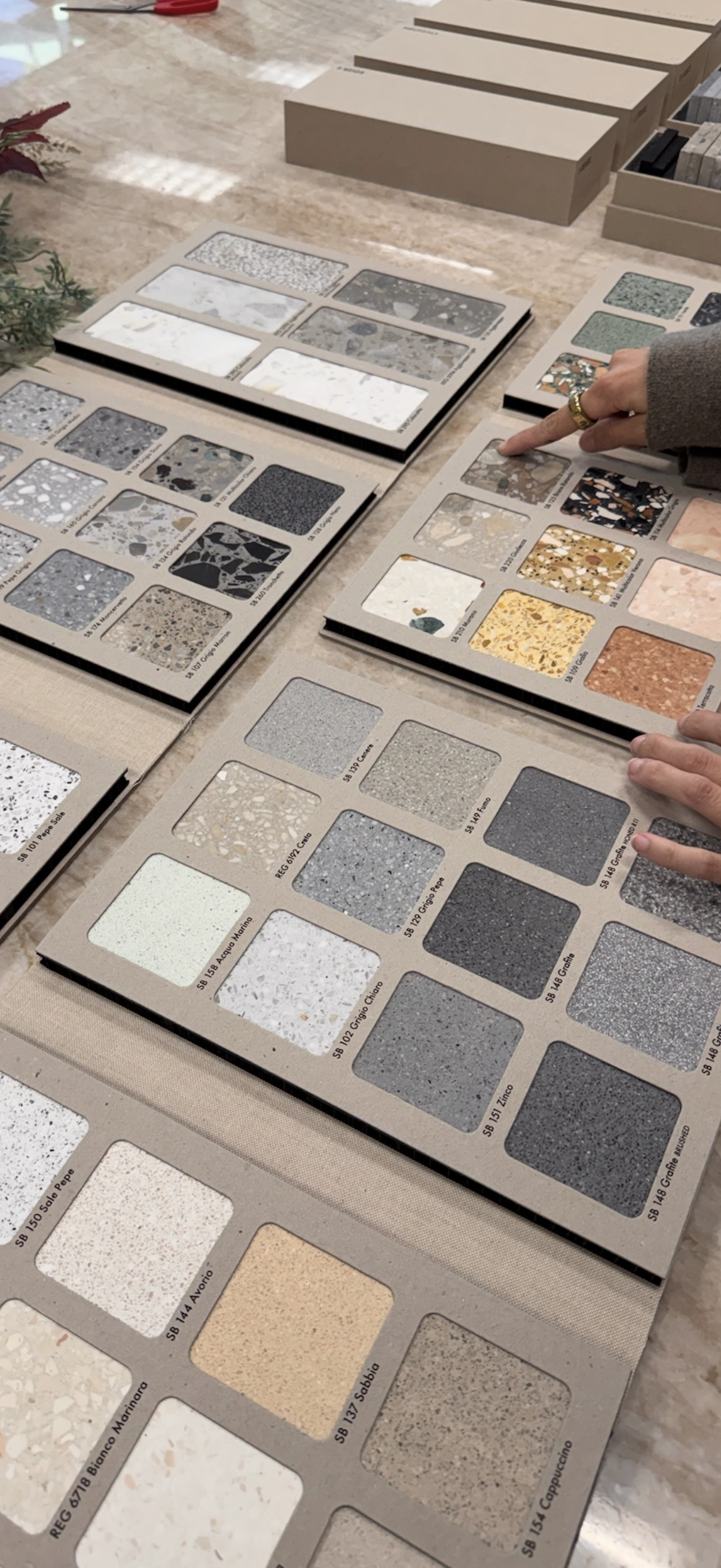
A small stone sample can help confirm a general color or finish, but it cannot show how a full slab will read across a kitchen island or wall. Natural stone often contains areas of stronger and softer movement, shifts in background color, mineral deposits, veins, fissures, fossils, and other geological features that may only become apparent when the entire slab is visible.
When selecting slabs at Arista Stones, we recommend viewing them from both close range and farther away. Up close, you can inspect texture, finish, mineral composition, and smaller details. From farther away, you can better understand the overall movement and how the material may read once installed across a large surface.
For larger projects, consecutive slabs are also important. If a kitchen requires several slabs, looking at the bundle together can help determine how the material may flow across an island, perimeter countertops, backsplash, or other surfaces. When bookmatching is part of the design, slab sequence becomes even more significant.
These are difficult decisions to make from an online image alone.
Pay Attention to Undertones
One of the most common mistakes in stone selection is looking only at the most obvious color in a slab. A white quartzite may have a warm cream background, a cooler gray undertone, gold veining, green mineral deposits, or a combination of several tones. Those details can affect which cabinetry, flooring, metals, tile, and paint colors work around it.
Whenever possible, bring other project materials with you when selecting slabs. Cabinet doors, flooring samples, paint chips, tile, hardware, and fabric can all be useful. Something that looks neutral by itself may read very differently next to a warm white cabinet or cool gray floor.
Designers frequently use our slab yards this way, and homeowners can do the same. Looking at materials together tends to reveal combinations that are difficult to judge from individual photographs.
Understand the Finish
Finish can change natural stone considerably. A polished surface reflects more light and can emphasize color and movement, while a honed finish typically has a softer, more matte appearance. Leathered, brushed, sandblasted, and other textured finishes can bring out different aspects of a stone and may be particularly effective on granites, quartzites, marbles, and other materials with strong mineral structure.
The finish also affects the way a material feels within the architecture of the room. A highly polished marble can feel formal and reflective, while the same family of stone in a honed finish may feel softer and more relaxed.
Rather than treating finish as an afterthought, it is worth considering alongside the slab itself.
Know What Natural Stone Will Look Like Over Time
Natural stone is not a manufactured surface, and that is an important distinction when deciding whether it is right for a project. Some stones will develop patina with use. Marble can etch when exposed to acidic substances. Certain stones may require sealing, and maintenance recommendations can differ based on material, finish, application, and fabrication.
For many homeowners and designers, those characteristics are part of the appeal. Old marble floors, limestone walls, and stone countertops found throughout Europe and historic architecture are beautiful partly because the material records use and age rather than remaining visually frozen.
The important thing is understanding what you are purchasing and deciding whether those characteristics align with your expectations.
A knowledgeable stone supplier should be willing to have that conversation before the material is sold.
Consider Porcelain When the Application Calls for It
Natural stone is a major part of what we do at Arista, but there are applications where large-format porcelain makes more sense. Porcelain is particularly useful when a project requires consistency, low maintenance, UV stability, large-format coverage, or thinner material.
It can be used for countertops, fireplaces, shower walls, feature walls, outdoor kitchens, flooring, furniture, and exterior applications depending on the product and installation requirements.
We carry porcelain because it solves different design and performance problems than natural stone. The decision should not necessarily be framed as porcelain versus stone; it should be based on what the particular area of the home requires.
A kitchen may use quartzite countertops while porcelain continues through an outdoor cooking area. A bathroom might pair natural marble flooring with large-format porcelain shower walls. Using both materials thoughtfully can often produce a better result than insisting on one surface throughout an entire project.
Where You Purchase Stone Can Affect the Selection Process
A stone supplier does more than provide inventory. The quality of the selection process depends on having access to full slabs, knowledgeable guidance, properly organized bundles, a strong range of materials, and people who understand how stone moves from selection through fabrication.
At Arista Stones, we source natural stone internationally and work with homeowners, interior designers, architects, builders, and fabricators throughout the process. Our inventory includes familiar materials as well as less common stones that may not appear in every slab yard. We also source materials specifically for projects when the right option is not already available locally.
This becomes especially valuable when a client is trying to achieve a particular color, movement, finish, slab size, or architectural look rather than simply looking for a generic countertop material.
Our goal is not to persuade every customer toward the same five stones. It is to understand the project well enough to help narrow down what actually belongs in it.
Visit the Slabs Before Making the Final Decision
Natural stone is one of the materials in a home that benefits most from being selected in person. Photographs are useful for inspiration, but they flatten scale, alter color, and rarely communicate the complete character of the slab.
If you are planning a kitchen, bathroom, fireplace, bar, outdoor space, or custom home, visit the Arista Stones slab yard and look through the material at full scale. Bring samples from the project if you have them, compare different stone types, and take the time to see what works with the rest of the design.
Sometimes the material you ultimately choose will be exactly what you came looking for. Sometimes it will be a slab you had never heard of before walking through the warehouse.
Both are good outcomes.