

Understanding Veining Patterns in Marble
Marble has remained one of the most sought-after surface materials because every slab carries distinct movement, depth, and character. Veining patterns play a major role in that appeal, shaping how a slab looks in a showroom and how it performs visually in a finished space.
For designers and homeowners, veining often drives the entire selection process. Color matters, finish matters, and durability matters, but the pattern within the stone usually determines whether a slab feels calm, dramatic, formal, or modern. It helps buyers understand variation, compare slabs more accurately, and choose a surface that fits the scale and style of a project. Keep reading to better understand veining patterns in marble slabs to assist in your selection.
What Veining Means in Marble
Veining refers to the lines, ribbons, swirls, and mineral markings that run through marble. These patterns form naturally over time as minerals settle and shift within limestone under heat and pressure.
That natural formation gives marble its layered visual movement. No two slabs look exactly alike, which makes slab viewing essential for any project that depends on consistency, flow, or matched layouts.
Some veining appears soft and diffuse, while other veining looks bold and has a high contrast. The structure, direction, and color of those lines all affect how the slab reads once installed.
Why Veining Patterns Matter
Veining patterns influence much more than appearance. They also shape the design direction of a room, especially when the stone will cover a large island, full-height backsplash, fireplace surround, or primary bath feature wall.
A slab with quiet, subtle veining can support a restrained and elegant design palette. A slab with strong, sweeping movement can become the focal point of the room and guide material choices for cabinetry, paint, metal finishes, and lighting.
This is why slab selection requires more than choosing a marble name or a color family. Buyers need to evaluate the actual slab and the way the veining moves across the full surface.
The Main Types of Marble Veining
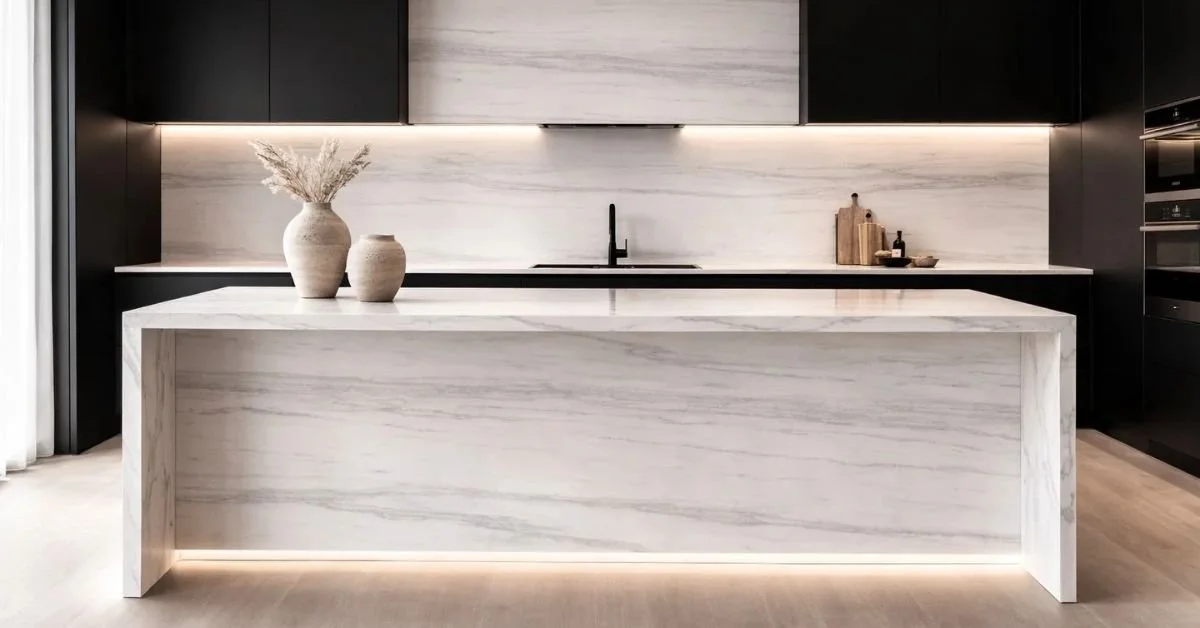
Linear veining runs in a more consistent direction across the slab. This style creates a clean and tailored look that works well in contemporary interiors, waterfall islands, and vertical applications where uninterrupted movement adds structure.
Cloud-like veining appears softer and more dispersed. This pattern often creates a classic look that suits traditional kitchens, bathrooms, and spaces that need gentle movement rather than sharp contrast.
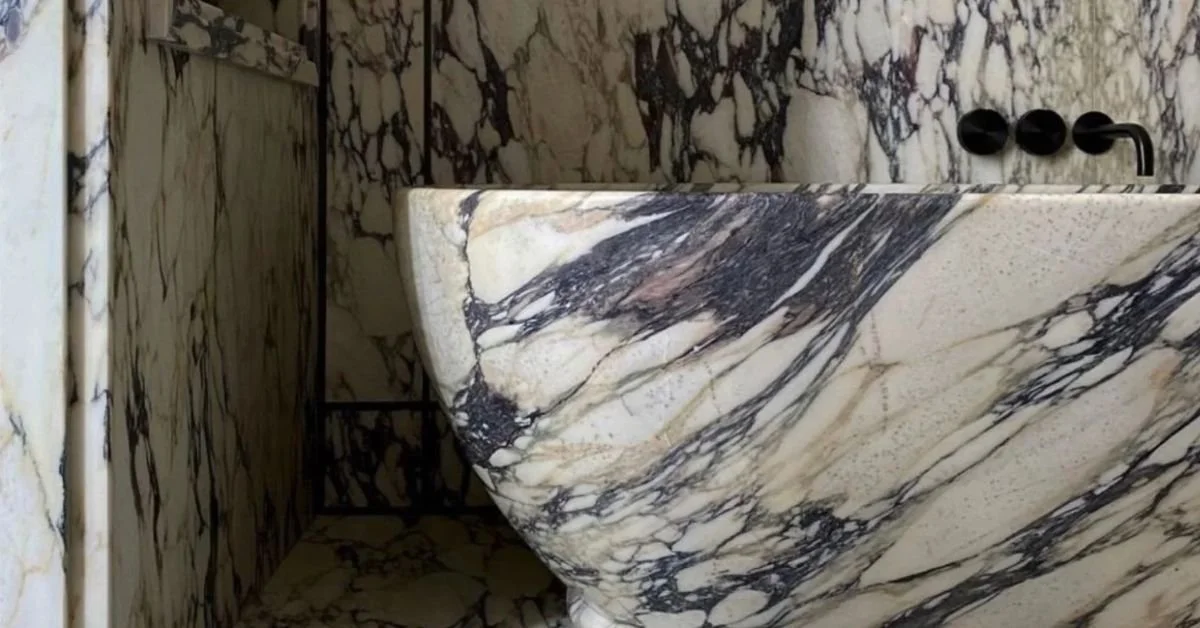
Dramatic veining features bold lines with stronger shifts in color and direction. These slabs stand out in large applications and often suit projects that call for a statement surface with visual energy.
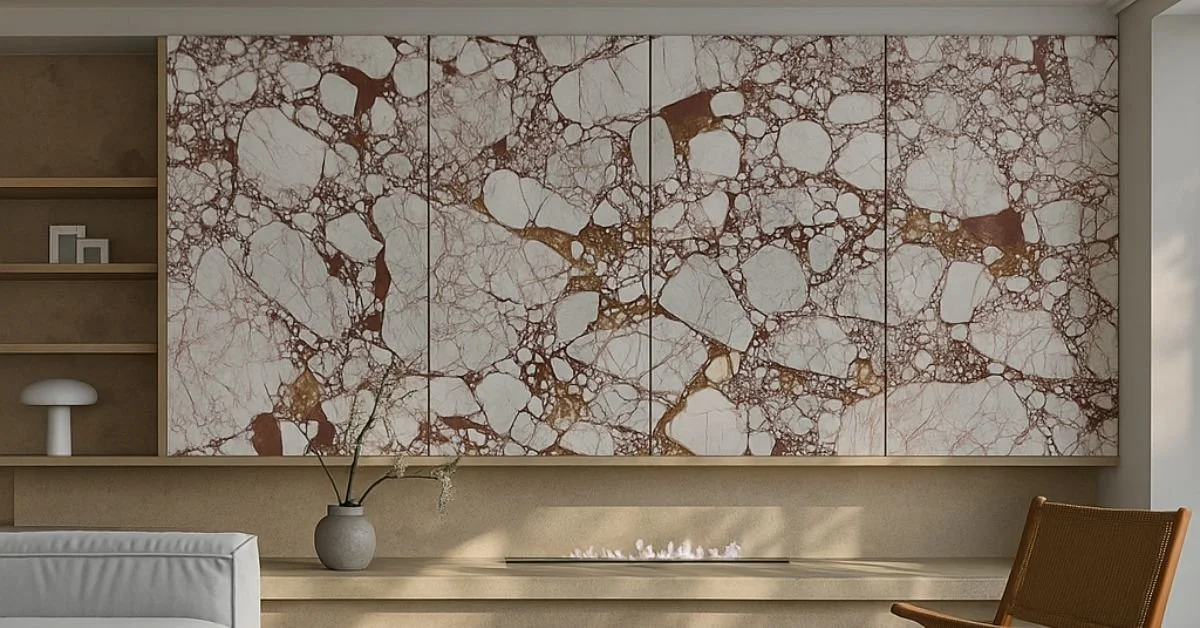
Brecciated patterns show fragmented shapes and angular movement rather than long, flowing lines. These slabs can feel artistic and distinctive, especially in powder rooms, bars, and feature walls where the stone needs to command attention.
How Veining Affects Design Style
The direction and intensity of veining can change the mood of a room. Soft gray veining on a white background often supports a timeless and refined look, while high-contrast black or white veining can create a more dramatic and upscale result.
Designers often use veining to reinforce the architecture of a space. Horizontal movement can make a surface feel wider, while vertical installation on walls or surrounds can draw attention upward and emphasize height.
Scale also matters. Fine, delicate veining may look sophisticated in smaller rooms, while broad, sweeping movement often works better on large islands or expansive walls where the full pattern has room to develop.
Reading a Slab Beyond the Sample
Small samples rarely show the full story of marble. A sample may reveal the background color and a hint of veining, but it cannot capture the direction, density, or rhythm that becomes visible across a full slab.
That is why in-person slab selection remains so important for marble stone slabs. Viewing the full slab in a gallery helps buyers assess where the strongest movement sits, how the pattern may align with cutouts, and whether multiple slabs coordinate well enough for the scope of the project.
Light, Finish, and Veining Visibility
Lighting changes the way veining appears. Bright natural light tends to reveal more contrast and detail, while softer interior lighting can mute some variation and make the slab feel calmer.
Finish also plays a role. Polished marble usually sharpens contrast and brings out more depth in the background and veins. Honed marble softens reflection and can make the overall pattern appear more understated.
Because of those shifts, evaluate a slab under lighting conditions that reflect the intended installation space as closely as possible. That approach leads to more confident decisions and fewer surprises after installation.
Matching Veining to the Application
Not every veining pattern fits every use. A kitchen island with heavy visual importance may benefit from a slab with more movement and character, especially if the surrounding finishes remain simple and restrained.
A bathroom vanity or shower may call for a different balance. In some spaces, soft veining creates a restful and clean appearance, while in others, bold movement adds needed contrast against neutral tile and cabinetry.
Fireplaces, feature walls, and bar surfaces often invite more expressive slabs because those applications allow the stone to take center stage. In these settings, dramatic veining can create a memorable focal point without overwhelming the room.
Practical Considerations During Selection
Veining should always be reviewed with the project layout in mind. Sink cutouts, cooktop openings, seams, and edge profiles can interrupt movement, so the slab needs to support both the design goal and the fabrication plan.
Consistency between slabs also matters when a project requires more than one piece. Some marble selections have broad range in vein thickness, direction, and background tone, which means adjacent slabs may look more different than expected.
Working with an experienced slab gallery helps simplify those decisions. A knowledgeable team can guide buyers toward slabs that suit the project visually while accounting for layout, variation, and overall material flow. Arista Stones emphasizes curated slab selection, expert guidance, and a customer experience built around premium surfaces and long industry experience.
How To Choose the Right Veining Pattern
The best starting point is the overall design intent. A quiet and minimal room often benefits from softer movement, while a bolder interior may call for striking contrast and more pronounced patterning.
Next, consider scale and placement. Large surfaces can support broader movement, while smaller applications may need finer veining to keep the space balanced.
Finally, evaluate the slab in person whenever possible. Photos can help narrow choices, but full slab viewing offers the clearest understanding of direction, variation, and visual impact.
Understanding veining patterns in marble helps designers and homeowners select stone with greater confidence. Instead of choosing only by color or name, buyers can focus on movement, scale, and layout to find a slab that truly fits the project.
For projects that call for premium marble stone slabs, Arista Stones offers a curated selection and a knowledgeable team that helps clients compare slabs, evaluate variation, and choose surfaces with confidence. Visit Arista Stones to explore available inventory and start the slab selection process with experts who understand natural stone.