Popular Marble Finishes and Where To Use Them
Marble brings natural character to interiors, but its surface finish strongly influences how a room looks and functions. A glossy slab reflects light differently from one with a soft, matte appearance. Texture also changes how readily a surface shows fingerprints or everyday wear. Understanding popular marble finishes and where to use them helps homeowners and designers choose stone that suits their space rather than relying on color alone. The right finish supports the design while respecting marble’s natural properties and maintenance needs.
Why Marble Finishes Matter
A finish describes the treatment applied to the exposed surface of a marble slab. It affects sheen and texture, but it does not change marble into a stainproof or scratchproof material. Marble contains calcium carbonate, which reacts to acidic substances such as lemon juice and vinegar. That sensitivity matters regardless of the finish you select.
The finish also changes how you perceive the stone’s movement. Polishing often brings out color contrast and veining, while softer finishes create a quieter impression. Before committing to a slab, examine a large section under lighting similar to the intended room. Small samples rarely reveal the full relationship between finish and pattern.
Polished Marble for Reflective Elegance
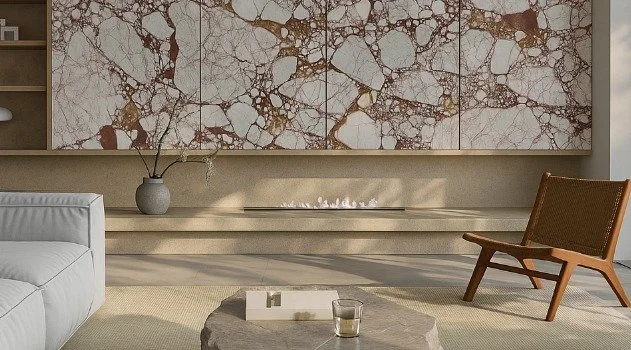
Polished marble has a smooth, glossy surface that reflects surrounding light. Its shine can emphasize deep colors and make distinct veins appear especially crisp. This finish suits interiors where the stone serves as a visual focal point. It complements formal designs.
Consider polished marble for fireplace surrounds or decorative wall panels. Bathroom vanity tops can also benefit from its luminous appearance when owners understand the care involved. Water spots and fingerprints may stand out against the reflective surface, especially on darker stones. Suitable cleaning helps maintain its appearance.
Polished marble is less forgiving of visible etching than many people expect. Acidic spills can leave dull marks that interrupt the shine. On kitchen counters, that possibility deserves serious consideration before selecting the finish. Kitchen use requires realistic expectations.
Honed Marble for Understated Spaces
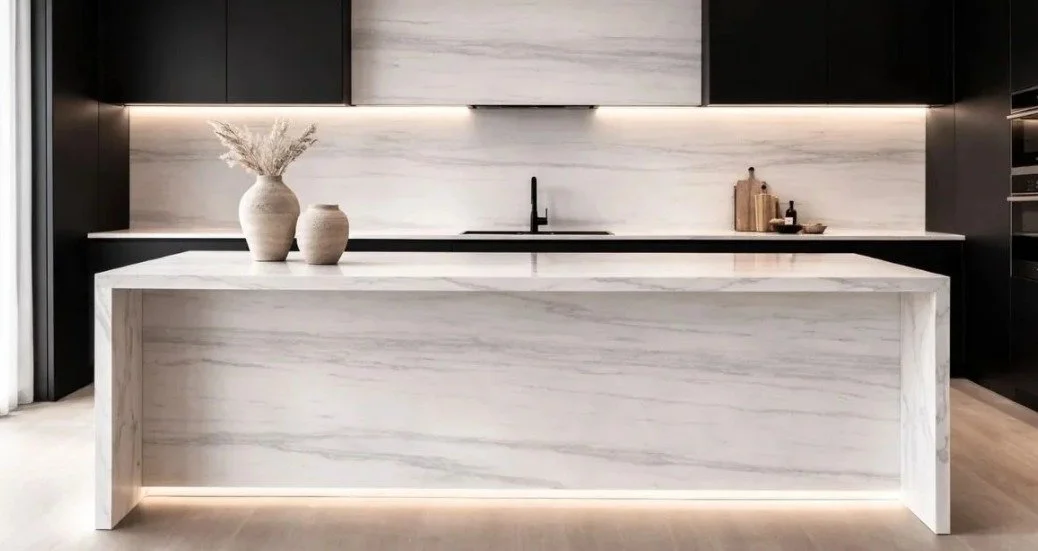
Honed marble has a smooth surface with little to no gloss. Its subdued appearance often feels relaxed and inviting, making it a natural fit for contemporary interiors. Honing can soften the visual contrast of dramatic veining without concealing the stone’s character. Designers frequently choose it when they want natural material to feel integrated rather than showy.
Honed marble works well for bathroom counters and kitchen islands. It also suits wall cladding where strong reflections might distract from surrounding finishes. Because the surface lacks a mirrorlike sheen, minor etching may appear less obvious than on polished marble. However, honing does not prevent etching or staining.
Some honed marbles may show oils or darken temporarily when wet. Sealing recommendations depend on the specific stone and its porosity. Discuss those requirements with a qualified stone professional before installation. Test a sample under household conditions.
Matching the Finish to the Room
Start with how people will use the surface. A decorative wall faces different demands from a busy kitchen counter. Consider exposure to moisture and acidic substances before deciding which appearance you prefer. A finish should support the room’s practical needs, not simply match an inspiration photograph.
Lighting matters just as much as function. Polished marble can brighten a dim setting through reflection, while honed marble creates a softer visual effect. Textured finishes introduce shadows that become more noticeable under directional lighting. Review samples at different times of day whenever possible.
Finally, consider maintenance alongside the overall design. Marble benefits from appropriate cleaning practices and professional guidance about sealing when needed. No finish makes the stone maintenance-free. Understanding the care each finish requires helps you choose marble that suits your lifestyle and maintains its natural beauty over time.
Find Quality Marble at Arista Stones
Understanding popular marble finishes and where to use them makes it easier to select a surface that fits your design goals. At Arista Stones, we offer high-quality marble slabs selected for their exceptional natural beauty and distinctive character. As a family-owned stone supplier, we help homeowners and design professionals evaluate options with confidence. Visit a nearby Arista Stones showroom to view available marble and discuss which selections suit your project.
Leathered Marble for Tactile Character
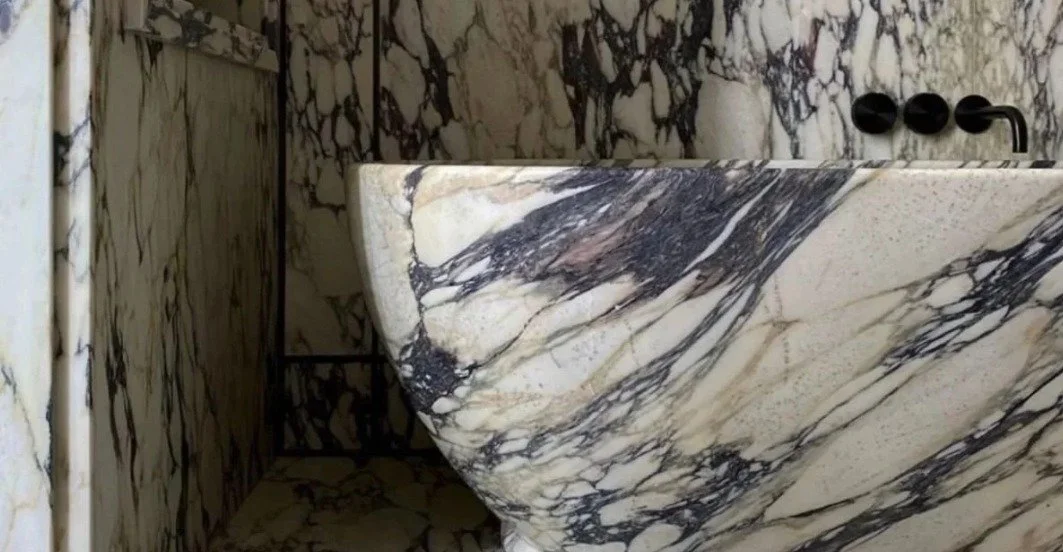
Leathered marble features a subtly textured surface with a low sheen. Its contours can highlight natural variations in the stone, giving the material a more tactile presence. The exact appearance varies by marble variety and finishing process. Some slabs feel gently rippled, while others have more noticeable relief.
This finish can suit accent walls and furniture surfaces where texture adds depth. It may also work on a bathroom vanity when the chosen slab and care routine suit that application. Because recesses can collect residue, textured marble may require more attentive cleaning than smooth surfaces. Ask to handle an actual finished sample rather than judging the texture from photographs.
Leathered finishes are not available on every marble. Availability also varies among suppliers and individual collections. Confirm the finish before planning a room around a specific slab. View the pattern from several angles.
Brushed Marble for Soft Texture
Brushed marble has a gently worn appearance created through surface brushing. Compared with polished marble, it offers less reflection and a more tactile feel. Brushing reinforces the stone’s character. It is often appealing in spaces with warm materials and restrained detailing.
Brushed marble can complement feature walls or decorative surrounds. Depending on the product and its suitability, designers may also consider it for certain floor applications. Texture alone does not guarantee slip resistance, especially when water is present. For flooring, verify the product’s tested performance and intended use with the supplier and installation professional.
Brushed surfaces can hold dirt in small irregularities. Routine cleaning should follow the stone manufacturer’s recommendations. Avoid abrasive household products that could alter the finish. The goal is to preserve the intended texture without damaging the marble.
Tumbled Marble for an Aged Look
Tumbled marble typically has softened edges and a weathered surface. This treatment often appears on smaller tiles rather than large decorative slabs. Its informal character can suit traditional interiors or spaces inspired by older architecture. Variations between pieces contribute to the overall effect.
Tumbled marble tiles can work beautifully on backsplashes and selected bathroom walls. Some products also suit floors, subject to their specifications. Their textured appearance does not eliminate marble’s sensitivity to acids. Grout joints and surface irregularities may increase the attention needed during cleaning.
When combining tumbled tiles with larger marble slabs, compare their undertones carefully. Similar names do not guarantee matching colors. Variation can enhance an intentional palette. Viewing the materials together helps avoid unexpected contrasts.