Choosing Natural Stone Countertops for Luxury Homes
Choosing natural stone countertops for luxury homes begins with understanding how each slab contributes to the character and long-term appeal of a space. Natural stone brings authentic variation that can make a kitchen, bathroom, bar, or entertaining area feel distinctly personal rather than manufactured. Yet selecting a beautiful slab is only part of the process. Homeowners and design professionals should also consider the stone’s performance, finish, movement, and relationship to the surrounding materials before making a final selection.
Start With the Overall Design Vision
A luxury countertop should feel connected to the architecture and interior design rather than added as an afterthought. Before comparing individual slabs, consider the mood you want the room to create. A dramatic surface with expressive veining can become a focal point, while quieter stone can support cabinetry, lighting, and other prominent design elements.
Consider the room’s scale and natural light alongside selected finishes. The right stone should create visual balance while giving the room the depth expected in a thoughtfully designed luxury home. Thoughtful comparison helps ensure the slab supports the room’s proportions and creates the overall visual presence the project deserves.
Understand the Character of Different Natural Stones
Granite and quartzite are popular natural stone options, but each slab has its own visual qualities. Granite can feature speckling, sweeping movement, mineral deposits, or more consistent patterns depending on the material. This range gives designers flexibility when coordinating a countertop with different architectural styles.
Quartzite often appeals to homeowners who appreciate elegant movement and distinctive natural patterns. Its appearance can vary considerably from one selection to another, which makes viewing the actual slab especially important. Consider how a specific slab works within the intended design.
Geological processes create natural stone, so variation is part of its appeal. Veining, color shifts, fissures, and mineral characteristics can make each slab unique. These differences can give a luxury space authentic custom character.
View the Full Slab Before Making a Decision
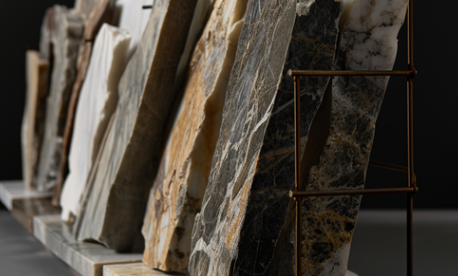
Small samples can help establish a general color direction, but they cannot show the complete personality of natural stone. A full slab reveals the direction of the veining and changes in tone. It also shows areas of concentrated movement. These details can strongly influence how the countertop looks after fabrication.
Viewing the full slab also helps you think about placement. A bold section may work beautifully on a kitchen island, while a calmer area may suit a perimeter countertop. Your fabricator can determine layout possibilities based on measurements and project requirements, so professional coordination is essential before you make final decisions. When possible, evaluate slabs with other finish samples. This can reveal subtle undertones.
Select the Actual Slab, Not Just a Stone Name
Natural stone names can help narrow a search, but they do not guarantee that every slab will look identical. Two slabs sold under the same material name may show noticeable differences in movement or coloration. That individuality is one reason natural stone works so well in custom interiors.
Take time to examine the actual slabs reserved for the project. Look across the entire surface rather than focusing only on one attractive section. Consider how the pattern may appear once the fabricator cuts the slab for the intended applications. This approach helps homeowners make a more informed selection and gives designers a clearer foundation for coordinating the rest of the room.
Work With Experienced Stone Professionals
A luxury project often involves many connected decisions, and the stone supplier is one part of that team. An experienced supplier can help you understand available materials and view slabs that fit the design direction. The fabricator then handles measurements, cutting, installation, and related technical decisions.
Professional collaboration is especially valuable with natural stone because every slab deserves individual evaluation. Hire a qualified professional to install natural stone countertops rather than attempting a DIY installation. Qualified professionals can properly handle the selected material from slab selection through installation.
Find Natural Stone That Fits Your Luxury Home
Ultimately, choosing natural stone countertops for luxury homes is about finding a material that feels intentional within the design and appropriate for everyday use. The best slab should complement the home while bringing the natural variation that makes genuine stone so distinctive. Arista Stones offers a variety of natural stone slabs for homeowners, designers, builders, and other professionals seeking premium surfaces for custom projects. With decades of industry experience and a carefully curated selection, our team can help you compare available slabs and choose material that supports your design vision.
Consider How You Will Use the Countertop
Luxury design should support everyday life as well as visual impact. Think about how often you will use the countertop and what activities will happen around it. A busy kitchen may have different priorities than a formal bar or a bathroom vanity.
Natural stones have different characteristics, and care requirements can vary by material. Ask questions about the stone you are considering so you understand what to expect in the intended setting. A knowledgeable slab supplier can explain material characteristics, while a qualified fabricator can provide guidance about fabrication, installation, sealing, and ongoing care.
The best selection suits the design concept and homeowner expectations. Daily use should inform the decision.
Think Carefully About Finish and Texture
Finish affects how natural stone interacts with light and how its color or pattern appears in the room. A polished finish can create a reflective appearance that emphasizes depth. Other finish options may create a softer visual effect, depending on the stone and available treatment.
The surrounding design should guide this choice. In a bright kitchen with large windows, the way light moves across the countertop may become a major part of the design. In a more subdued interior, a less reflective surface may complement the atmosphere.
Ask which finishes are available for the specific slab you prefer. Not every material responds to finishing in the same way, and availability can vary.
Plan the Finished Countertop Details
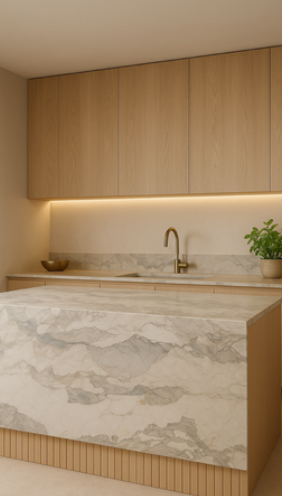
Highly figured stone deserves careful planning because the pattern can influence the entire countertop layout. Veining may affect where a designer wants visual movement to continue or where a focal section should appear. Large islands can make these decisions particularly noticeable.
Seams are another practical consideration. Their location depends on slab dimensions, countertop measurements, access, and fabrication requirements. A professional fabricator should evaluate these details and determine an appropriate plan for the project.
Edge profiles also affect the finished appearance. Discuss available edge options with your fabricator, who can recommend profiles that suit the selected material and design.