Marble Countertops: Common Myths and Misconceptions
Marble countertops have been used in homes, hotels, restaurants, bakeries, and architectural landmarks for generations. Yet marble remains one of the most misunderstood countertop materials.
Myth 1: Marble Is Too Delicate for Kitchen Countertops
Marble is sometimes described as if it cannot withstand normal kitchen use. That is an exaggeration.
Marble is softer than granite and many quartzites, but “softer” does not mean unusable. Marble has been used for floors, staircases, tables, pastry counters, fireplaces, and architectural surfaces for centuries.
A marble countertop can handle everyday cooking, serving, and gathering. What it requires is awareness. Cutting boards should be used during food preparation, spills should be wiped promptly, and harsh acidic or abrasive cleaners should be avoided.
The better question is not, “Is marble too delicate?” It is, “Am I comfortable with a natural surface that may show evidence of use over time?”
For many homeowners and designers, that evolving character is part of marble’s appeal.
Myth 2: Marble Stains Every Time Something Spills
Marble can stain, but staining is not inevitable.
A stain occurs when a substance is absorbed into the stone and causes discoloration. Oils, deeply pigmented liquids, and spills that remain on the surface for extended periods can create stains, particularly when the stone is not properly sealed.
An appropriate penetrating sealer can slow absorption and provide more time to clean a spill. Prompt cleanup, coasters, cutting boards, and stone-safe products also reduce the likelihood of staining.
Sealing does not create an invisible sheet of plastic over marble. It simply improves the stone’s resistance to absorption.
It is also important to distinguish staining from etching. They are not the same issue, and treating them as interchangeable causes unnecessary confusion.
Myth 3: Etching and Staining Are the Same Thing
This is one of the most common marble misconceptions.
A stain is discoloration caused by a substance entering the stone.
An etch is a change in the surface finish caused by a chemical reaction. Marble contains calcium carbonate, which reacts with acids. Lemon juice, vinegar, wine, tomatoes, certain cleaning products, and other acidic substances can dull the finish where contact occurs. The Natural Stone Institute specifically cautions that products containing acids, including lemon and vinegar, may dull or etch calcareous stones such as marble.
On polished marble, an etch may appear as a dull or lighter-looking spot. On honed marble, the difference may be less visually noticeable because the surrounding finish is already matte.
Sealer can help protect against staining, but it generally does not prevent etching. This distinction should be explained clearly before a marble countertop is selected.
Myth 4: Sealing Makes Marble Completely Maintenance-Free
Sealing marble is useful, but it is not magic.
A penetrating sealer helps reduce the rate at which liquids are absorbed. It does not make marble impervious to every substance, eliminate the possibility of etching, or remove the need for everyday care.
The appropriate sealing schedule depends on the specific stone, finish, application, sealer, installation, and level of use. Rather than relying on a universal calendar, homeowners should follow the recommendations of their fabricator and sealer manufacturer.
You can also ask a stone professional about performing a simple water-drop test. If water darkens the stone relatively quickly, it may be time to discuss resealing.
The goal is not to constantly treat the countertop. It is to maintain it appropriately based on the actual material and how it performs in the home.
Myth 5: Marble Is Difficult to Clean
Daily marble cleaning is relatively simple.
For routine care, use a soft cloth with warm water and a pH-neutral cleaner made for natural stone. A small amount of mild dish soap may also be appropriate when recommended by your stone professional.
Avoid vinegar, lemon-based cleaners, abrasive powders, scouring creams, and harsh household chemicals. Acidic products can etch marble, while abrasive cleaners may scratch or dull certain finishes.
A simple marble countertop routine includes:
Wipe spills promptly.
Clean with a soft cloth or nonabrasive sponge.
Use a pH-neutral stone cleaner.
Dry the surface to minimize streaking and residue.
Use cutting boards, trivets, and coasters as needed.
Marble does not require complicated daily maintenance. It requires the correct maintenance.
Myth 6: Polished Marble Is Always Better Than Honed Marble
Polished and honed marble are not different grades of stone. They are different surface finishes.
Polished marble has a reflective finish that emphasizes color, veining, and depth. It can create a formal, luminous appearance, but changes in sheen caused by etching may be easier to see.
Honed marble has a smooth, matte finish. It tends to feel softer and more relaxed, and minor etching may blend more naturally into the existing surface.
A honed finish is often selected for kitchens because it can create a more forgiving, lived-in appearance. Polished marble may be preferred when the goal is dramatic reflectivity and saturated color.
Neither finish is universally better. The right choice depends on the desired look, the stone itself, the location, and the homeowner’s expectations.
Whenever possible, view the actual slab in person and ask to see finish samples before making a decision.
Myth 7: All White Marble Looks the Same
Natural marble is not a printed surface.
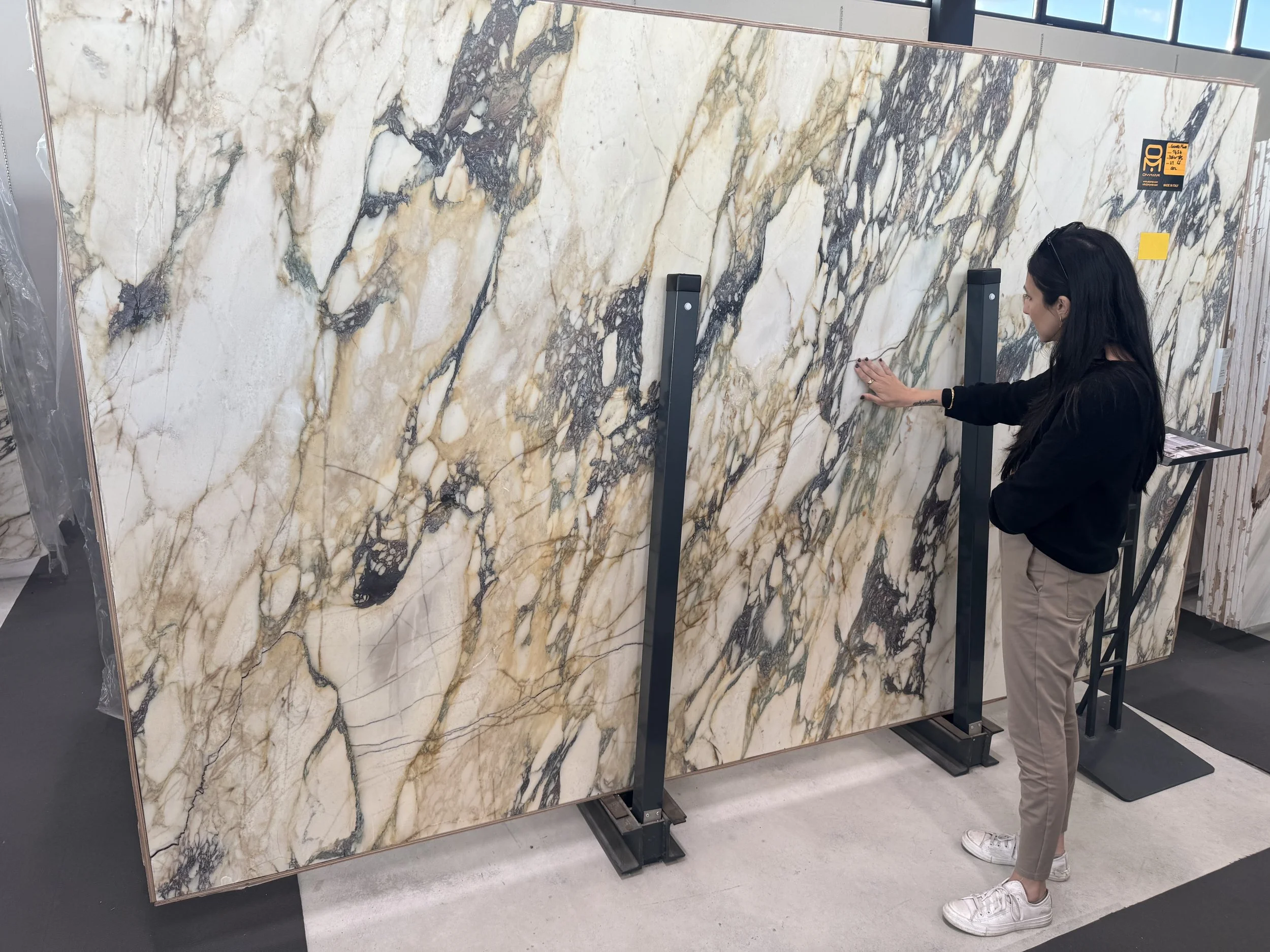
Two slabs from the same named material can have different veining, background tones, mineral deposits, fissures, movement, and overall personalities. Even consecutive slabs from the same block can vary.
Some white marbles have cool gray veining. Others include warmer taupe, gold, charcoal, violet, or green undertones. One bundle may feel subtle and architectural, while another feels expressive and dramatic.
This is why selecting marble from a small sample can be misleading. A sample may show the general background color, but it cannot communicate the full movement or scale of an entire slab.
For projects involving large islands, full-height backsplashes, waterfall panels, or bookmatched features, slab selection and layout planning become especially important.
The variation is not a defect. It is one of the defining qualities of natural stone.
Myth 8: Marble Countertops Must Stay Perfect to Be Beautiful
Marble does not remain visually frozen forever, and it is not meant to.
With use, marble may develop subtle changes in sheen, small scratches, softened edges, and a natural patina. In historic homes and old-world interiors, these signs of use are often what make the stone feel authentic and established.
That does not mean every homeowner must embrace visible wear. Some people prefer countertops that remain highly uniform and require as little attention as possible. For those homes, porcelain or certain engineered surfaces may be a better fit.
Choosing marble works best when expectations are honest from the beginning.
If you want a natural material with depth, individuality, history, and the ability to become more personal over time, marble can be an exceptional choice. If every small mark will feel like damage, another surface may provide greater peace of mind.
Are Marble Countertops Durable?
Yes, marble countertops can be durable and long-lasting when they are properly selected, fabricated, installed, and maintained.
However, durability is not a single characteristic. A surface may be structurally durable while still being vulnerable to scratches, stains, or changes in finish.
Marble can withstand normal household use, but it is not identical to granite, quartzite, porcelain, or engineered stone. Each material performs differently.
Before selecting marble, consider:
How frequently the countertop will be used
Whether the household cooks with acidic ingredients
Whether a polished or honed finish is preferred
How quickly spills are normally cleaned
Whether natural patina is appealing or undesirable
Where seams and heavily used areas will be located
Whether the chosen slab is suitable for the intended application
A knowledgeable slab supplier and experienced fabricator can help evaluate these questions before fabrication begins.
Is Marble a Good Choice for a Kitchen?
Marble can be a beautiful and functional kitchen surface for the right homeowner.
It is especially well suited to people who value natural variation and are willing to use basic protective habits. It also works beautifully for statement islands, baking areas, perimeter countertops, full-height backsplashes, coffee bars, vanities, fireplaces, and furniture.
Some projects combine materials. A homeowner might use marble on an island while choosing a different surface for the busiest preparation area. Others intentionally use marble throughout the kitchen because they want the material to age consistently.
There is no single correct approach. The best countertop choice depends on the project, not on a generalized list of rules.
Questions to Ask Before Buying a Marble Slab
Before purchasing marble countertops, ask your slab supplier or fabricator:
Is this specific marble appropriate for my intended application?
What finish would you recommend?
What should I expect regarding etching and staining?
Does this slab need to be sealed?
What cleaning products should I use?
Are there fissures, inclusions, or areas that require special layout planning?
How will the veining flow across seams, edges, and backsplash pieces?
Can I view the full slab or consecutive slabs before fabrication?
Who will determine the final slab layout?
What maintenance should I expect after installation?
The answers should relate to the actual slab and project. Natural stone should never be selected based only on a generic description.
The Truth About Marble Countertops
The truth is more nuanced than either extreme.
Marble is not indestructible, but it is not impractical. It can stain, but every spill does not become permanent. It can etch, but etching is not the same as structural damage. It requires appropriate care, but that care does not have to be complicated.
Most importantly, marble offers something manufactured surfaces cannot fully reproduce: geological variation shaped by nature and revealed differently in every slab.
Choosing marble is less about pursuing perfection and more about selecting a material whose character fits your vision.
Find the Right Marble for Your Project
At Arista Stones, we believe the best stone decisions begin with clear information and the opportunity to experience the material in person.
Our marble collection includes subtle architectural stones, dramatic statement slabs, warm old-world selections, and expressive materials chosen for one-of-a-kind interiors. Our team works with homeowners, designers, architects, builders, and fabricators to help identify stones suited to each project’s design and performance needs.
Visit an Arista Stones showroom in Arizona or Utah to explore available marble slabs, compare finishes, and discover the natural variation that cannot be captured in a small sample.
Every slab is different. Your space should be too.
Frequently Asked Questions About Marble Countertops
Do marble countertops stain easily?
Marble is porous and can absorb oils or pigmented liquids, particularly when a spill is left on the surface. Proper sealing and prompt cleanup can reduce the likelihood of staining, but no natural stone should be considered completely stain-proof.
Can you prevent marble from etching?
Etching cannot always be completely prevented because acids react with the calcium carbonate in marble. Cutting boards, coasters, prompt cleanup, pH-neutral cleaners, and a honed finish can make marble easier to live with.
How often should marble countertops be sealed?
There is no universal schedule for every marble. The frequency depends on the stone, finish, sealer, installation, and level of use. Follow the recommendations of your fabricator and sealer manufacturer.
Can marble handle heat?
Marble is naturally heat resistant, but trivets are still recommended. Hot cookware may create thermal shock, affect sealers, or leave residue on the surface.
Is honed marble better for a kitchen?
Honed marble is frequently chosen for kitchens because its matte surface can make changes in sheen less noticeable. However, polished marble may be appropriate for homeowners who prefer a reflective, more formal appearance.
Can damaged marble be repaired?
Many stains, scratches, chips, and etch marks can be improved by a qualified stone restoration professional. The appropriate treatment depends on the material, finish, and type of damage.